
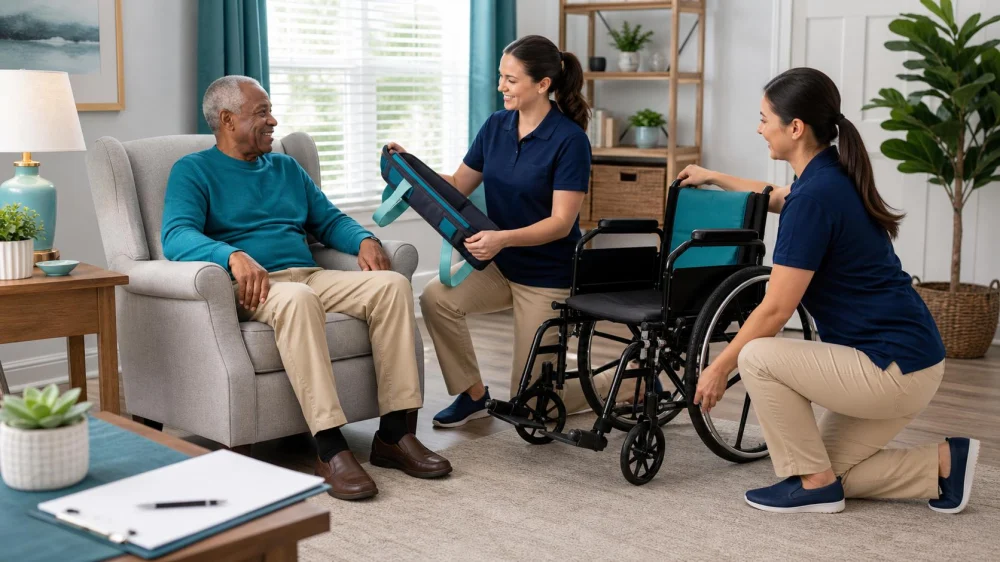
Transfer Belt in Home Care: Use the Care Plan, Training, and Right Equipment
On this page
Quick answer
A gait or transfer belt is a stabilization aid for selected people; it is not a lifting strap and is not appropriate for every transfer. Use it only when the person’s current care plan, clinical assessment, equipment instructions, and worker training specify it. Confirm weight-bearing ability, cooperation, pain, skin, surgery, tubes, clothing, destination, and the number of helpers before moving.
If the person is weaker, dizzy, confused, unable to bear the expected weight, newly injured, or different from baseline, stop. Do not improvise a manual lift. Contact the supervising clinician or service and use emergency help when a fall or acute symptom requires it.

Chapman Rose, Inc Residential Home Care for the Elderly
Garden GroveOrange CountyCalifornia
10461 Chapman Ave, Garden Grove, CA 92840, USA
Assess before every transfer
Read the latest transfer section of the care plan and shift notes. Ask the person how they feel and explain the plan before touching them. Check alertness, pain, dizziness, breathing, strength, ability to follow cues, footwear, clothing, skin concerns, recent surgery, and attached lines or devices. Confirm which side is stronger and whether a mechanical lift, slide device, standing aid, or second trained caregiver is required.
OSHA identifies lifting and moving clients as a major musculoskeletal risk in home healthcare and emphasizes assessment, care planning, appropriate devices, training, and review. See its safe patient handling resources.

Allpoint Home Health Care
Los AngelesLos Angeles CountyCalifornia
11340 W Olympic Blvd #220, Los Angeles, CA 90064, USA
Prepare person, space, and equipment
- Gain consent and preserve privacy.
- Clear rugs, cords, pets, clutter, and unnecessary people from the route.
- Position the chair, bed, commode, or mobility aid exactly as trained.
- Set brakes, footrests, armrests, bed height, and footwear according to the plan.
- Inspect the approved belt for damage, contamination, closure function, and correct size.
- Place clothing between skin and belt when directed to reduce abrasion.
- Assign one person to lead cues when two caregivers are required.
- Keep a phone or call method accessible without creating a trip hazard.
Do not substitute a robe belt, sheet, or unapproved strap. A wheelchair brake does not make every transfer safe, and body mechanics alone cannot replace required equipment.
Follow the trained method
Use the person-specific sequence taught by the qualified trainer. Give short agreed cues, allow time to respond, and keep movements coordinated. The person should contribute only within their assessed ability. Never pull on arms, shoulders, clothing, a catheter, or medical tubing.
OSHA guidance notes that gait belts with handles can help stabilize selected ambulatory people but are not designed to lift them. If the planned movement begins to fail, follow trained fall-response procedures rather than trying to hold the person upright at any cost. Protect both the person and caregiver from injury.
Stop and escalate changes
Stop for sudden weakness, chest pain, trouble breathing, fainting, new confusion, severe pain, a new neurological change, equipment failure, unsafe behavior, or loss of expected weight-bearing. Call emergency services for urgent symptoms or serious injury. After a fall, do not automatically lift the person; assess and follow the care plan and emergency instructions.
Report near misses, skin marks, pain, increased assistance, altered technique, equipment defects, and refusals. The care team may need to reassess transfer status, staffing, therapy goals, or equipment. Do not silently normalize a transfer that has become harder.
Transfer checklist
- Current care plan and transfer level confirmed
- Consent, symptoms, and weight-bearing checked
- Correct equipment and number of caregivers available
- Route and destination prepared
- Belt inspected and applied only as trained
- Leader and cues agreed
- Stop criteria understood
- Outcome and any change documented
- Equipment cleaned and stored per instructions
Limitations
This article does not teach a transfer technique or determine who can use a belt. Medical condition, cognition, body size, surgery, skin, equipment, home layout, and staffing change the risk. Hands-on competency assessment and a current individualized plan are required.
FAQ
Can a transfer belt lift someone from the floor?
It is not a lifting device. Follow the post-fall plan and use trained help or mechanical equipment as assessed.
Can one caregiver do every belt transfer?
No. The plan may require two caregivers or different equipment.
What if the person refuses?
Do not force the transfer. Address immediate safety, respect consent, and notify the appropriate supervisor or clinician.
Can the belt touch bare skin?
Follow instructions; OSHA guidance notes clothing between the belt and skin can reduce abrasion.
What if the transfer changed today?
Stop and report the change before repeating the old method.
Evidence notes
OSHA materials support safe-handling programs based on assessment, appropriate equipment, care planning, worker training, and review, and distinguish stabilization belts from lifting devices. Individual evidence includes the care-plan version, competency record, equipment ID and inspection, pre-transfer status, assistance level, outcome, and incident or near-miss note.
Conclusion
A transfer belt is safe only inside a larger system. Confirm the person’s current ability, follow the care plan and trained method, prepare the route and equipment, and stop when conditions change. The goal is a controlled transfer that protects dignity and both bodies.






 All You Need HHC5.0 (4 reviews)
 Hearts In Home Senior Care Provider5.0 (1 reviews)
 Care To Stay Home5.0 (5 reviews)
 Care Unlimited Health Services Inc2.0 (9 reviews)
 Western States Home Health Care Agency2.0 (8 reviews)
 Heavenly Home Health Care5.0 (1 reviews)
 Home Care Daily Routine Sheet: Build It With the Person
 Tips for Managing Chronic Conditions at Home: A Practical Guide
 The Importance of Cybersecurity in Home Health Care - HomeCare Hub
 How to Make Daily Hygiene Routines More Comfortable and Respectful
 How to Encourage Older Adults to Stay Socially Active in Small Groups
 How to Make Home Exercises Engaging and Safe for Older Adults