
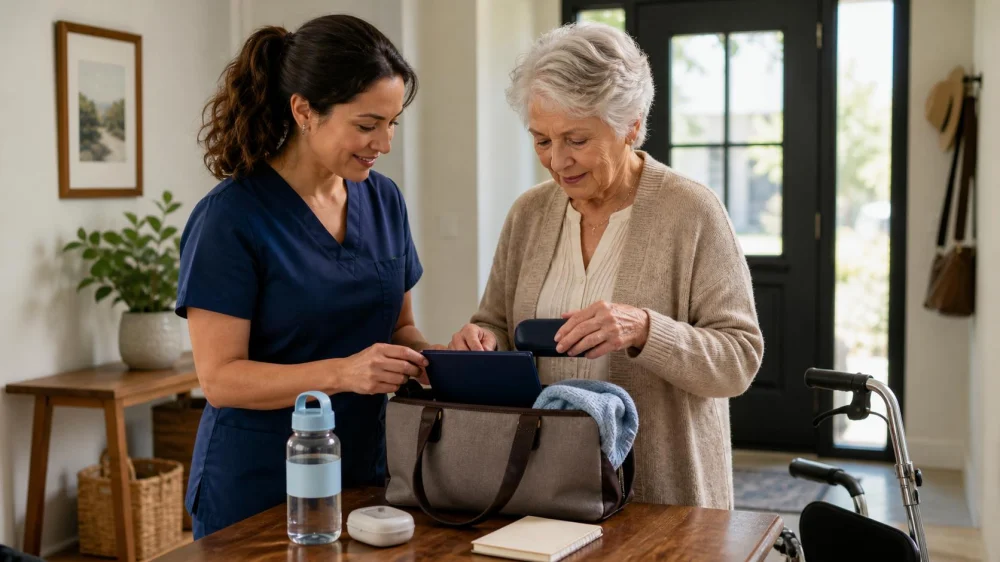
Caregiver Appointment Bag: Pack Records and a Backup Plan
Table of contents
Quick answer
Pack the older adult's current medication list, insurance and identification requested by the office, clinician contacts, prioritized questions, relevant records, mobility and communication items, and written transportation details. Confirm consent for the caregiver's role. Bring only medicines or medical supplies required by the established plan, in original labeled packaging when applicable. Add water, clothing, and snacks only if permitted by dietary or test instructions.

Helping Hands Home Health Care LLC
GlendaleLos Angeles CountyCalifornia
1241 S Glendale Ave Floor 2, suite 205B, Glendale, CA 91205, USA
Plan with the person
The appointment belongs to the person receiving care. Ask what help they want: transportation only, note-taking, help describing observations, or participation in decisions. They may want part of the visit to be private. Do not assume a caregiver can receive medical information without permission.
Confirm date, location, clinician, appointment purpose, arrival time, parking, mobility access, language or communication support, and visitor rules. Ask whether forms can be completed in advance and whether the office already has needed records.
Check preparation instructions directly with the office. Fasting, medication changes, specimen collection, imaging, sedation, and arrival requirements are specific to the visit. Never stop or alter a medicine based only on a generic checklist.
Create a transport plan with pickup contacts, mobility equipment, vehicle transfer needs, weather, traffic, and a backup if the appointment runs late. If sedation or a procedure is planned, confirm the discharge and escort rules in writing.

TheKey - Senior Home Care
PasadenaLos Angeles CountyCalifornia
117 E Colorado Blvd Suite 600, Pasadena, CA 91105, USA
Pack information
Use one folder for documents and avoid carrying the only copy of an irreplaceable record. Include the items the office requested:
- Identification and insurance cards
- Current medicines, doses, schedules, supplements, and allergies
- Names and contacts for clinicians and pharmacy
- Recent treatment, hospitalization, or test information
- Advance-care or decision-making documents when relevant
- Appointment questions in priority order
- A brief symptom or observation log
- Blank paper and a pen for instructions
Medication information must be current. Include prescription medicines, over-the-counter products, vitamins, and herbal supplements. If the clinician asked for containers, keep products in original labeled packaging and carry them securely. Do not mix pills in an unlabeled bag.
Describe symptoms with dates and facts: location, onset, trigger, duration, trend, and related changes. Separate the person's own report from a caregiver observation. “She says the room spins when she stands” and “I saw her hold the wall twice Tuesday morning” are clearer than “balance is bad.”
Protect privacy. Keep documents in a closed folder, do not leave the bag in an unattended vehicle, and avoid visible labels that reveal unnecessary health information. Follow agency policy for storing or transmitting records.
Pack for comfort
Bring eyeglasses, hearing aids with working batteries, communication boards, dentures, and mobility devices the person normally uses. Check equipment before departure without changing prescribed settings. Label items discreetly according to preference.
Add a light layer of clothing, tissues, and a small comfort item if useful. Choose a bag the caregiver can manage without losing a hand needed for safe mobility support. Do not hang a heavy bag from a walker or wheelchair unless the equipment provider approves the load and position.
Water and snacks require caution. A fasting test, fluid restriction, swallowing plan, diabetes plan, allergy, or medication schedule can change what is safe. Follow written instructions and ask when unclear. Do not offer food simply because the waiting room is delayed.
Pack required incontinence, ostomy, oxygen, or other medical supplies only according to the established care plan and training. Check quantities and backup power or battery needs. Emergency medicines must remain accessible and handled as directed.
Manage the visit
At check-in, confirm preferred name, communication needs, and the caregiver's authorized role. Keep mobility equipment reachable and routes clear. Tell staff promptly if the person becomes distressed, weak, short of breath, confused, or otherwise changes.
Start with the most important concern. Let the person answer when able, then add observations with permission. Avoid turning the visit into a private conversation between caregiver and clinician while excluding the patient.
Take notes on findings, decisions, new or stopped medicines, tests, referrals, warning signs, and follow-up. Ask for plain-language written instructions. Repeat the plan back: who will do what, by when, and whom to call.
Before leaving, confirm prescriptions, pharmacy, lab location, next appointment, transport restrictions, diet or activity instructions, and after-hours contact. If a procedure occurred, follow discharge requirements exactly.
Return and update
On return, put documents and equipment in their agreed locations. Do not implement a medication change from memory. Compare written instructions with the current list and use the care team's reconciliation process. Ask the clinic or pharmacy about any conflict.
Share information only with authorized caregivers and according to privacy policy. Update the shift handoff, calendar, supply list, and follow-up tasks. Mark the source and date of each instruction.
Restock the appointment bag without leaving sensitive records or medicine inside longer than intended. Recharge approved devices, replace used supplies, and note anything that failed during the trip.
Contact the clinician for symptoms that match the written warning signs or for instructions you cannot reconcile. Use emergency services for urgent breathing difficulty, chest pain, severe injury, sudden neurologic changes, or other emergency symptoms according to local guidance.
Limitations
This guide cannot define a specific person's supplies, medical preparation, consent, transportation, or emergency plan. Diagnoses, medicines, swallowing needs, oxygen, mobility, cognition, and procedures require individualized instructions.
Follow the older adult's preferences, clinician directions, agency policy, privacy rules, and equipment manuals. Legal authority to receive or make decisions varies and should be documented appropriately.
Sources and evidence
The National Institute on Aging recommends preparing prioritized questions, a complete medicine and supplement list, insurance and clinician information, relevant records, glasses and hearing aids, and notes. It also emphasizes consent, privacy, and keeping the older adult central during a caregiver-supported visit.
- NIA tips for caregivers attending a medical appointment
- NIA guide to preparing for a doctor's appointment
- NIA questions to ask during a checkup
Frequently asked questions
Should I bring every medicine bottle?
Follow the office's instructions. Some clinicians request containers; others prefer a current list with name, dose, and schedule. Keep any products labeled and secure.
Can the caregiver answer all questions?
The person should answer when able and choose the caregiver's role. Add observations with permission and preserve private conversation when requested.
What if the office says to fast?
Confirm exactly what food, fluids, medicines, and time period the instruction covers. Do not guess or change medicine without appropriate direction.
Should the bag stay packed all the time?
A basic supply bag can be ready, but records, medicines, food, and batteries need current checks. Avoid leaving private information or temperature-sensitive items unattended.
What questions go first?
Prioritize new or worsening symptoms, treatment decisions, medicine issues, and safety concerns. Routine topics can follow if time permits.
How should instructions be shared afterward?
Use the authorized care record or handoff process. Include the source, date, exact task, deadline, and warning signs without posting private details publicly.
Conclusion
A good caregiver appointment bag supports the person's voice and reduces preventable gaps. Confirm the visit and consent, pack current records and communication tools, follow test and dietary instructions, and create a transport backup. Take clear notes and reconcile every change after returning home. Preparedness is useful only when it remains individualized, current, and private.






 All Care Home Health Provider2.0 (13 reviews)
 Alpha Care Inc.5.0 (4 reviews)
 Arosa Los Angeles4.0 (88 reviews)
 Casa Blanca Senior Care4.0 (6 reviews)
 West Coast Care4.0 (5 reviews)
 OI Home Care Services5.0 (1 reviews)
 Understanding the Emotional Impact of Caregiving
 How to Make Home Environments Comfortable and Stimulating for Older Adults
 Tips for Using Music and Memory Exercises to Support Cognitive Function
 Strategies for Helping Seniors Cope With Loneliness and Isolation
 How to Make Transportation and Outings Safe and Enjoyable for Seniors
 How to Support Seniors in Maintaining a Positive Mindset