
Glasses, Hearing Aids, and Dentures in Home Care: Label, Clean, and Store
On this page
Quick answer
Give glasses, hearing aids, and removable dentures one consistent storage place, labeled with the person's preferred identifier in a privacy-conscious way. Follow each device's instructions for cleaning, charging, batteries, and overnight care. Record whether each device is in use, stored, charging, missing, damaged, or sent for service at every caregiver handoff.
Ask permission and support the person's independence. Do not adjust, repair, or substitute a health device without the appropriate clinician or manufacturer guidance.

Zinnia Home Care Wellness
Los AngelesLos Angeles CountyCalifornia
2917 W Vernon Ave, Los Angeles, CA 90008, USA
Build the routine with the person
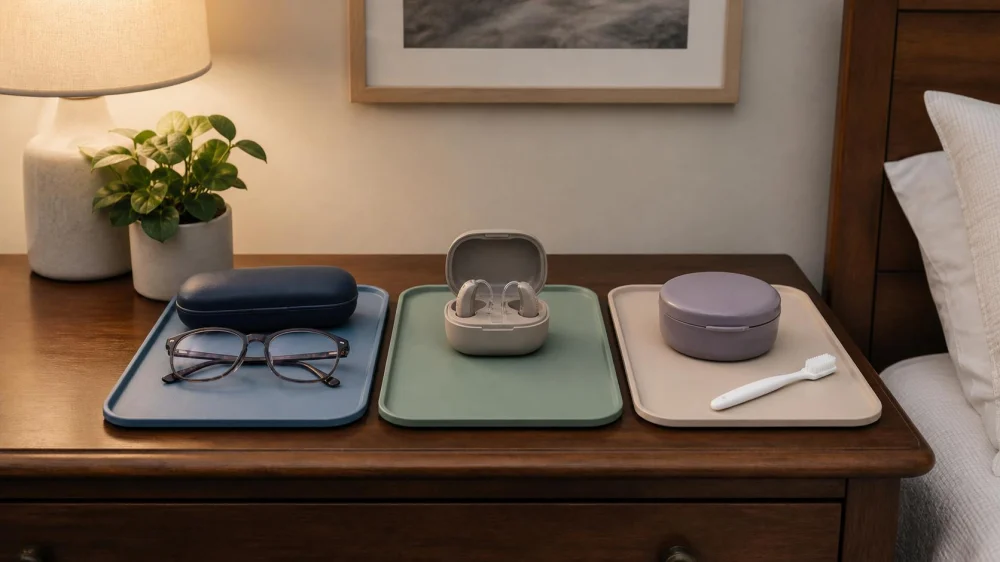
Ask the person when and where they want each device used, removed, cleaned, and stored. Choose locations that are easy to reach, well lit, stable, dry, and away from trash, laundry, food trays, sinks, pets, and young children.
- Use a dedicated case, tray, or container for each device.
- Keep left and right devices distinguishable when needed.
- Record charger, battery, cleaning, and supply details.
- Include the routine in the care plan.
- Use the least intrusive reminder that works.
Protect glasses
Store glasses in a hard case or stable tray with the arms folded as the frame maker recommends. Clean lenses with the method and materials recommended by the eyewear professional; rough tissues, clothing, and household cleaners can damage coatings.
Check for loose parts, sharp edges, bent temples, clouded lenses, and a changed fit. Keep backup glasses clearly separated and verify which prescription is current.

Foothill Homecare Partners
Sierra MadreLos Angeles CountyCalifornia
78 W Sierra Madre Blvd, Sierra Madre, CA 91024, USA
Handle hearing aids and batteries
FDA guidance advises following device instructions, avoiding water, alcohol, solvents, and heat unless specifically permitted, switching hearing aids off when not in use, replacing dead batteries, and keeping devices and batteries away from children and pets. Use only compatible charging accessories.
- Work over a clear, soft surface.
- Identify left and right devices.
- Inspect for wax, moisture, or visible damage.
- Clean and store exactly as instructed.
- Record charging or battery status.
Button batteries can cause severe injury if swallowed. Secure them immediately and use emergency guidance for suspected ingestion.
Follow the denture care plan
Follow the dentist's instructions for removal, brushing, soaking, and overnight storage. National Institute on Aging guidance recommends daily brushing with a denture-care product and overnight soaking in water or denture-cleansing liquid, but individual materials and dental plans can differ.
Use a clearly identified covered container, keep cleansing products separate from drinks and medicines, and never reshape or repair a denture at home. Handle it over a towel or basin of water to reduce breakage risk.
Use a device handoff check
At the start and end of a visit, check each device with the person: on body, in case, charging, soaking, packed for an appointment, missing, or awaiting service. Record the location without exposing private information.
When laundry, bedding, meal trays, or trash are removed, pause and verify devices are not wrapped in tissues, pockets, napkins, or linens.
Escalate loss, damage, or discomfort
Report a missing or damaged device promptly to the person and designated contact. Contact an eye-care professional, hearing professional, dentist, manufacturer, or care supervisor for changed fit, irritation, pain, sudden device failure, overheating, drainage, or a sudden change in vision, hearing, or oral function.
Do not continue using a device that causes injury, has exposed battery damage, or is visibly broken without qualified direction.
Important limitations
This is general U.S. home-care organization guidance, not medical, dental, audiology, vision, or device-repair advice. Devices and care plans differ. Follow the person's preferences, clinician instructions, manufacturer directions, care agency policy, and emergency guidance.
Evidence notes
NIA describes hearing aids as important assistive devices and provides denture-care guidance, while FDA emphasizes keeping hearing aids dry, avoiding damaging cleaning agents and heat, inspecting devices, and securing batteries. Consistent storage and handoff records reduce preventable loss around routine care.
FAQ
Should every device have a label?
Use an identifier appropriate to the setting and privacy needs, especially in shared homes or facilities.
Can hearing aids be cleaned with alcohol?
FDA advises avoiding alcohol, solvents, or water because they can damage electronics unless device instructions say otherwise.
Where should dentures stay overnight?
Follow the dentist's plan and material instructions, usually in a dedicated covered container.
Why check linens and meal trays?
Small devices are easily wrapped in tissues, napkins, clothing, or bedding and discarded or laundered.
What if a device suddenly fits differently?
Stop improvising adjustments and contact the appropriate clinician or device professional.
Next steps
Choose one safe location per device, gather its instructions and service contacts, label cases appropriately, and add status to the shift handoff. Review the routine with the person and every regular caregiver.






 PLACEMENT HELPERS5.0 (62 reviews)
 Aria Senior Care Assisted Living5.0 (3 reviews)
 New Chapter Home Health5.0 (4 reviews)
 BrightStar Care4.0 (55 reviews)
 Significant Home Health, Inc.5.0 (1 reviews)
 Visiting Angels5.0 (6 reviews)
 How to Provide Emotional Support to Dementia Patients
 The Importance of Self-Care for Family Caregivers: How to Stay Healthy While Caring for Loved Ones
 How to Encourage Social Engagement Through Hobbies and Clubs
 How to Budget for Home Care: Tips for Families – Planning for the Best Care
 How to Encourage Older Adults to Stay Socially Active Indoors
 The Role of Nutrition in Senior Health and Wellness