
Pet Safety Plan for Home Care Visits: A Family Checklist
On this page
- Quick answer
- Why pets need a written plan
- Create a pet profile
- Arrange a calm introduction
- Set pet and care zones
- Manage doors and arrivals
- Protect medical and care equipment
- Assign pet-care tasks clearly
- Address allergies, fear, and cultural needs
- Respond to stress or aggression
- Prepare pet emergency information
- Review the plan as care changes
- Visit-day checklist
- Frequently asked questions
- Next steps
Quick answer
Before home care begins, tell the agency or caregiver about every pet, including species, size, temperament, triggers, escape risk, feeding schedule, and veterinary contact. Decide where the pet will stay during arrivals, personal care, transfers, meal preparation, medication handling, and equipment use.
Use gates, closed rooms, leashes, crates, or another humane setup that the pet already tolerates. Keep collars and identification current, secure doors before each caregiver enters, and assign pet tasks in writing. A caregiver should not be expected to feed, walk, medicate, restrain, or transport a pet unless that duty is approved and included in the care arrangement. If a pet growls, lunges, bites, scratches, blocks access, or becomes highly stressed, stop the interaction and revise the plan.

WAYS Home Care & Health Agency, LLC
InglewoodLos Angeles CountyCalifornia
8617 S Crenshaw Blvd, Inglewood, CA 90305, USA
Why pets need a written plan
Pets can provide comfort, companionship, routine, and motivation for a person receiving care. They can also create trip hazards, door-escape risks, allergies, bites, scratches, noise, or interference with equipment.
A friendly pet may behave differently when an unfamiliar worker touches its person, moves furniture, operates a lift, or enters a bedroom. Repeated visits from rotating caregivers can add stress.
A written plan protects the care recipient, worker, pet, visitors, and household. It reduces assumptions about who closes a door, refills water, or handles a leash.
The goal is not automatic separation for every visit. It is predictable management based on the animal, care tasks, home layout, and caregiver comfort.

Blue Sky Home Health Care, Inc
Los AngelesLos Angeles CountyCalifornia
16501 Sherman Way Suite 210, Van Nuys, CA 91406, USA
Create a pet profile
List each pet’s name, species, breed or type if known, size, age, photograph, color, identification or microchip status, veterinarian, emergency contact, and usual location in the home.
Describe behavior in plain terms. Note whether the pet jumps, guards food, hides, runs through doors, reacts to uniforms, barks at equipment, dislikes touch, or becomes anxious around mobility aids.
Include cues the pet reliably knows and what family members use for calm redirection. Avoid asking a caregiver to experiment with unfamiliar training methods.
Record dietary restrictions, medications, and health concerns only when the caregiver has an approved role. Store veterinary instructions with pet supplies, separate from the care recipient’s medical information.
Arrange a calm introduction
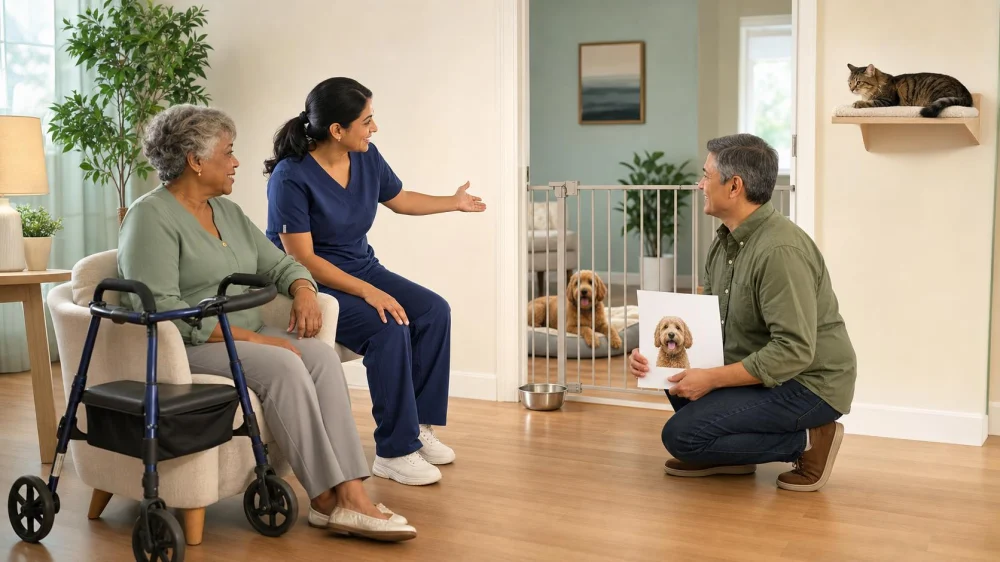
When possible, have a familiar family member present for the first visit. Keep the pet under the planned control method and let the caregiver observe from a comfortable distance.
Do not force contact, eye contact, petting, or treats. The caregiver can enter, speak calmly, and begin routine tasks while the pet adjusts.
Ask the caregiver privately about allergies, fear, religious or cultural concerns, and prior animal incidents. A worker should not feel pressured to handle a pet.
If the pet shows intense fear or aggression, consult a veterinarian or qualified behavior professional before expecting routine close contact.
Set pet and care zones
Identify a comfortable pet zone with water, bedding, appropriate temperature, and enrichment. It might be a familiar room, gated area, crate used as trained, or secure yard when weather and supervision are suitable.
Create pet-free zones for personal care, sterile supplies, medication preparation, wound-care materials, meal preparation when needed, and equipment movement. Follow the care provider’s infection-control policy.
Keep litter boxes, feeding bowls, toys, and beds out of transfer paths and clear walking routes. Do not place a pet zone where it blocks an exit.
Test gates and doors before relying on them. A barrier that worked for a small puppy may not contain an adult dog, and a cat may climb it.
Manage doors and arrivals
Use a consistent arrival routine. The caregiver can call or message before entering, while a household member secures the pet and confirms that the door is clear.
Place a discreet reminder inside the entry, without publicly advertising that a vulnerable adult lives alone. Avoid detailed pet or access information visible from outside.
Keep leashes, carriers, and treats away from the door unless they are part of the plan. Excited pets can push through while people handle bags and equipment.
At departure, confirm the pet’s location before opening the door. Do not assume that a pet seen sleeping minutes earlier remains there.
Protect medical and care equipment
Route oxygen tubing, charging cords, catheter tubing, and other equipment so pets cannot chew, pull, tangle, or trip over them. Follow equipment-provider instructions and never improvise covers that restrict airflow or create heat.
Keep medication, dressings, sharps containers, gloves, cleaning products, and food supplements in closed storage inaccessible to animals.
Mobility aids, lifts, walkers, and wheelchairs can frighten pets or catch tails and paws. Move the pet to its secure zone before transfers or equipment adjustment.
Oxygen creates special fire-safety requirements. Keep pets from damaging tubing and follow the oxygen supplier’s complete safety instructions.
Assign pet-care tasks clearly
Decide who feeds, waters, walks, cleans litter, schedules veterinary care, purchases supplies, and provides backup when the family is unavailable. Put names and contact methods in the household plan.
If a caregiver will perform a pet task, confirm agency policy, insurance, time, training, and documentation. Pet duties can reduce time available for the person’s authorized care.
Use premeasured food and simple instructions when appropriate. Keep pet medication separate and clearly identified to prevent confusion with human medication.
Never ask a caregiver to handle an aggressive animal, lift a heavy pet, clean hazardous waste without supplies, or drive a pet without prior approval.
Address allergies, fear, and cultural needs
Ask about allergies before assigning caregivers. Cleaning alone may not remove allergens, and keeping a pet in another room during the visit may not be enough for a sensitive person.
The agency may need to assign a different worker or require an environmental plan. Discuss what is feasible without minimizing the caregiver’s health.
Fear of animals is also valid. A pet described as friendly can still make someone feel unsafe. Use secure separation rather than asking the worker to “get used to it.”
Respect religious, cultural, and personal boundaries around animals. The care plan should support professional work without asking either party to defend private beliefs.
Respond to stress or aggression
Watch for stiff posture, hiding, trembling, panting, pacing, repeated barking, growling, swatting, guarding, lunging, or attempts to escape. These behaviors indicate that the current setup may be too stressful.
Do not punish, corner, grab, or stare at a distressed pet. Increase distance and use the familiar separation plan. A caregiver should leave the immediate area if safety is uncertain.
Report bites and scratches immediately according to agency policy, local requirements, and medical guidance. Wash an injury and seek appropriate care; do not conceal an incident to protect the pet.
After any incident, pause close-contact visits until the family, agency, veterinarian, and qualified behavior support establish a safer plan.
Prepare pet emergency information
Keep veterinary clinic, emergency veterinarian, family pet contact, and an authorized backup caregiver in the plan. Confirm who can approve treatment and payment if the owner cannot.
Prepare carriers, leashes, current photos, basic supplies, and a temporary destination for evacuation. Do not expect a home-care worker to evacuate pets unless that duty is explicitly planned and safe.
Include the number and type of pets in the household emergency plan for fire, severe weather, power outage, and hospitalization.
If a pet escapes, follow the family’s approved steps and local animal-control guidance. The caregiver should not chase into traffic or leave the care recipient unsafe.
Review the plan as care changes
Revisit the plan when a new caregiver starts, the pet’s behavior or health changes, new equipment arrives, mobility declines, or visit tasks expand.
A pet that once moved easily around a walker may become less predictable with age, pain, hearing loss, or vision changes. A care recipient may also become less able to manage doors or feeding.
Record near misses such as a pet underfoot, a chewed tube, an open gate, or a missed feeding. Near misses reveal problems before injury occurs.
Ask the caregiver what works. Frontline observations can improve placement of bowls, barriers, supplies, and arrival timing.
Visit-day checklist
- Confirm the caregiver’s arrival time.
- Move the pet to its familiar safe zone before the door opens.
- Clear bowls, toys, beds, and litter from walking and transfer routes.
- Secure medications, sharps, tubing, cords, and sterile supplies.
- State any approved pet task and who is responsible.
- Keep leashes, carrier, veterinary contacts, and current photo available.
- Watch for stress without forcing interaction.
- Confirm pet location before the caregiver leaves.
- Document incidents and revise the plan promptly.
Frequently asked questions
Can my pet stay in the room during care?
It depends on the pet, task, equipment, care recipient, and caregiver. Personal care, transfers, sterile tasks, and equipment movement often require separation.
Can a home-care worker walk my dog?
Only if the agency or worker approves the task and it is included in the care arrangement. Consider time, training, insurance, pet behavior, and the care recipient’s safety.
What if my pet is friendly but the caregiver is afraid?
Use secure separation or discuss assignment options with the agency. The caregiver should not be pressured into animal contact.
Should I put a pet warning sign outside?
Follow local requirements and seek agency advice. Avoid publicly sharing unnecessary details about the household or care recipient.
Who handles a pet during an emergency?
Name a family or community backup. A caregiver’s role depends on the written emergency plan, agency policy, immediate safety, and available resources.
Next steps
Create one page for each pet, choose safe zones, test barriers, and share the plan with the home-care provider before the next visit. Clarify pet tasks and emergency contacts in writing. Review the plan after any near miss, behavior change, or new care equipment.
This guide provides general household planning information. Animal behavior, medical equipment, workplace safety, and care responsibilities require individualized professional guidance.






 DigniTonic Home Care LLC5.0 (12 reviews)
 1 South Bay In Home Senior Care5.0 (1 reviews)
 Senior Helpers5.0 (26 reviews)
 Better You Home Care5.0 (14 reviews)
 Pro Care 2000 Home Healthcare5.0 (2 reviews)
 American Homecare Health Services2.0 (3 reviews)
 The Importance of Cybersecurity in Home Health Care - HomeCare Hub
 The Benefits of Journaling and Creative Writing for Older Adults
 Case Study: Reducing Hospital Readmissions with Home Care
 How Home Care Helped a Senior Recover After Surgery
 How to Make Home Environments Comfortable and Stimulating for Older Adults
 Fun Indoor Activities That Promote Mental Engagement for Elderly Loved Ones