
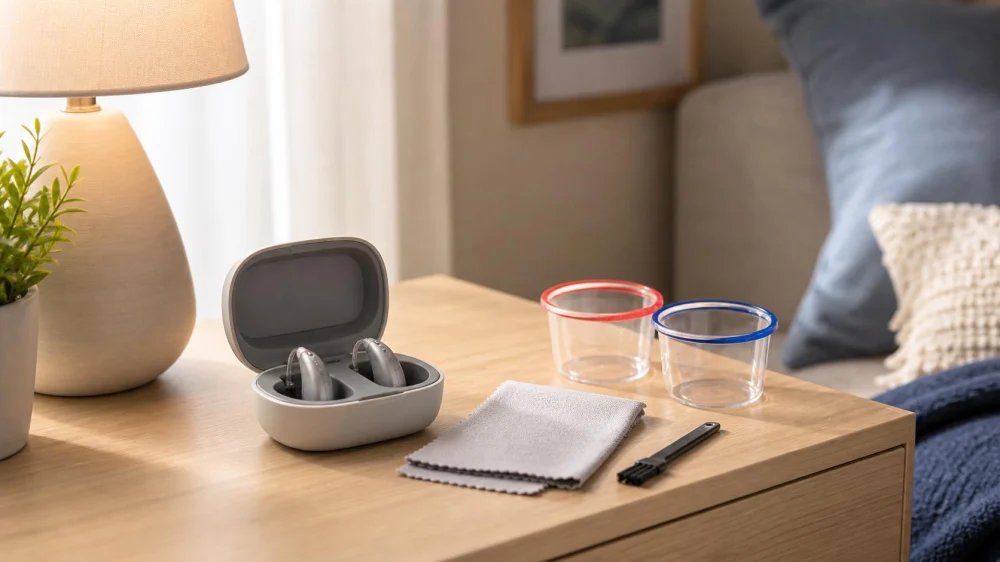
Home Care Hearing Aid Routine: Check, Clean, and Report
On this page
Quick answer
Use the person's care plan and the specific hearing-device instructions before assisting. With consent and clean dry hands, identify the correct device, check for visible damage or moisture, confirm the battery or charge, and ask about comfort and sound after insertion. Do not push anything into the ear or improvise repairs. Record what was done and report pain, drainage, sudden hearing change, repeated feedback, damage, or a missing device through the agreed care channel.

Healthy Heart Home Care
LawndaleLos Angeles CountyCalifornia
15901 Hawthorne Blvd # 410, Lawndale, CA 90260, USA
Why hearing-device routines need a clear handoff
Hearing devices support communication, orientation, safety information, social connection, and participation in care. Small differences in left and right devices, programs, batteries, domes, molds, cleaning tools, and storage can matter. A repeatable routine helps the person retain control while caregivers notice changes and pass accurate information to family, supervisors, audiology, or medical professionals.
This guide supports nonclinical home care in the United States. It does not diagnose hearing loss, remove earwax, treat an ear condition, program a device, choose parts, or replace an audiologist, clinician, manufacturer, agency policy, or individualized care plan. Worker roles and permitted tasks vary by jurisdiction and organization.

Partners For Care Home Care
Culver CityLos Angeles CountyCalifornia
5601 W Slauson Ave # 276, Culver City, CA 90230, USA
Details to confirm in the care plan
- The person's consent, preferred level of assistance, communication method, privacy choices, daily schedule, and situations when the device is not worn.
- Device type, left and right identifiers, serial or inventory record, earpiece or mold, charger, batteries, accessories, remote microphone, and storage case.
- Manufacturer instructions for handling, cleaning, drying, charging, battery replacement, water exposure, temperature, magnets, and troubleshooting.
- Baseline comfort, volume or program managed by the person, expected sound, usual feedback, skin condition, dexterity, vision, cognition, and fall considerations.
- Clean dry work area, hand hygiene, approved brush or cloth, wax guard or filter plan, small-parts control, pet and child access, and waste disposal.
- Signs to record: damage, cracks, blocked openings, moisture, corrosion, weak charge, unexpected lights, feedback, poor fit, pain, redness, drainage, or sudden change.
- Who to contact, urgent and routine thresholds, audiology appointment information, backup communication, lost-device plan, and shift handoff format.
Assist with the device step by step
- Ask permission, explain the task in the person's preferred format, wash and dry hands, and prepare a clean well-lit surface.
- Match the device to the correct ear using the established identifiers and compare it with the care plan before changing any part.
- Inspect the outside for visible damage, moisture, debris, loose pieces, battery or charge status, and condition of the approved accessories.
- Clean only as the manufacturer and care plan permit, keeping liquids and tools away from openings unless specifically instructed.
- Support insertion or removal only within training and the person's preference, never forcing a device that resists or causes discomfort.
- Ask the person about fit and sound, use backup communication while troubleshooting, and stop rather than repeatedly adjusting without guidance.
- Store, charge, or dispose of batteries as directed, count small parts, and document assistance, response, exceptions, and contacts made.
Record date and time, consent, device and side, visible condition, battery or charge, approved cleaning, insertion or removal assistance, the person's comfort and sound report, any feedback or malfunction, missing parts, storage location, action taken, person contacted, instructions received, and information handed to the next caregiver.
Ear, device, consent, and role limits
Do not insert cotton swabs, tools, drops, or cleaning products into the ear; remove impacted wax; treat pain or drainage; force a device; substitute unapproved batteries or parts; reprogram settings; or open the device unless the person's plan, professional instructions, training, and role allow it. Button batteries and small components can cause severe harm if swallowed and require secure handling.
Stop device use and contact the designated clinician, audiologist, nurse, supervisor, or family contact for pain, bleeding, drainage, skin injury, sudden or marked hearing change, dizziness, a lodged part, recurrent device failure, or a lost device. Treat swallowed or inserted button batteries as an emergency and contact emergency or poison-control services immediately. Call emergency services for stroke signs, severe sudden neurologic symptoms, collapse, or another immediate danger.
Frequently asked questions
Can a caregiver change hearing-aid settings?
Only within the person's preference, care plan, training, role, and device instructions. Do not reprogram clinical settings without authorized professional guidance.
What if the device whistles?
Check the documented fit, visible obstruction, charge, damage, and environment without forcing changes, then report persistent feedback through the agreed channel.
Should hearing aids be worn all day?
Follow the person's plan, comfort, clinical guidance, and device instructions. There is no one schedule for every user and situation.
Can I clean earwax from the ear?
Not as routine device care. Clean only the device parts allowed by instructions and refer ear symptoms or wax concerns to an appropriate clinician.
Where should the devices be stored?
Use the designated labeled case or charger in a dry secure location away from heat, moisture, pets, children, and accidental disposal.
Sources and evidence
Use the individual's current care plan, the hearing-device and accessory manufacturers, the audiologist or hearing clinician, the home care agency's policies, and applicable scope-of-practice rules. Use an authorized medical or poison-control service for symptoms, lodged parts, or battery exposure. The person receiving care remains the primary source for consent, comfort, and communication preference.
Conclusion and next steps
Start with consent and the care plan, use clean dry handling, inspect rather than improvise, and confirm comfort in the person's preferred communication format. Secure small parts and store the device consistently. Record exceptions and pass them to the right person. A reliable hearing-aid routine is a communication routine: it protects the device while keeping the individual involved in every decision.






 PIH Health Home Health Arcadia5.0 (1 reviews)
 Oxford Healthcare4.0 (11 reviews)
 Prestige Home Care Angels, Inc.4.0 (7 reviews)
 Wise Home Health, Inc.0.0 (0 reviews)
 Homewatch CareGivers of West Los Angeles5.0 (12 reviews)
 Progress Home Health Care5.0 (2 reviews)
 How to Build a Support Network as a Caregiver: Essential Steps for Success
 How to Make Personal Care and Grooming Comfortable and Respectful
 How to Make Home Environments More Stimulating and Engaging for Seniors
 Tips for Balancing Work and Caregiving Responsibilities | HomeCare Hub
 Strategies for Promoting Sleep Hygiene and Better Rest in Older Adults
 Understanding the Stages of Alzheimer’s Disease