
Laundry Hygiene in Home Care: A Caregiver Checklist
On this page
Quick answer
Handle home-care laundry with clean hands, minimal shaking, prompt containment, and clear separation between used and clean items. Follow each garment’s care label, the washing machine instructions, the person’s care plan, and any infection-control directions from a qualified clinician. Wear task-appropriate gloves when contact with body fluids is possible, remove them correctly, wash your hands, and keep clean laundry away from contaminated surfaces.
Laundry hygiene means handling, washing, drying, and storing textiles in ways that reduce cross-contamination while protecting the person’s comfort, privacy, belongings, and fabric care needs. This checklist is for routine U.S. home-care settings, not healthcare-facility linen processing.

VIP Home Care
Palos Verdes EstatesLos Angeles CountyCalifornia
2325 Palos Verdes Dr W #315, Palos Verdes Estates, CA 90274, USA
Plan a safe, respectful laundry routine
Good laundry care starts before the washer runs. Ask what the person wants washed, which products they prefer, how clothing should be sorted, and where clean items belong. A familiar routine protects dignity and reduces preventable mix-ups.
Before starting, check:
- The current care plan and household instructions.
- Known skin sensitivities, fragrance preferences, or product restrictions documented by the family or care team.
- Garment labels, especially for delicate fabrics, compression garments, waterproof covers, and adaptive clothing.
- Whether reusable medical textiles have separate manufacturer cleaning directions.
- Which hamper or container holds used items and which surface is reserved for folding clean laundry.
Get permission before checking pockets or handling personal garments. Place valuables, identification, tissues, medication patches, and sharp objects aside according to household or agency policy. Do not discard an unfamiliar item without asking.

Landmark Health
CerritosLos Angeles CountyCalifornia
12750 Center Ct Dr S Suite 650, Cerritos, CA 90703, USA
Step-by-step laundry checklist
- Prepare the route. Clear a direct path from the collection point to the laundry area. Keep the clean folding surface empty and dry.
- Gather supplies. Have the approved detergent, hampers or washable bags, task-appropriate gloves, and any label-specific products ready before handling used textiles.
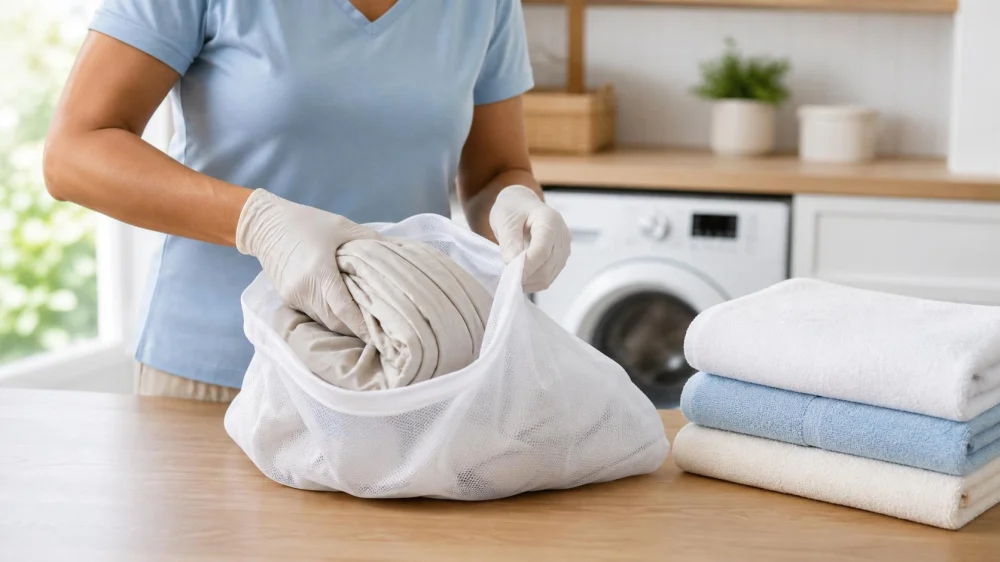
- Perform hand hygiene. Clean and dry your hands before touching supplies. Put on gloves if the task may involve urine, stool, blood, vomit, wound drainage, or another body fluid.
- Contain used items. Roll heavily soiled areas inward when practical. Place laundry directly into the designated container rather than setting it on the floor, furniture, or a clean counter.
- Avoid shaking. Do not snap, flap, or hug used bedding against clothing. Gentle handling limits the spread of dust, debris, and droplets.
- Sort carefully. Follow garment labels and the household’s system for color, fabric, temperature, and special items. Do not sort contaminated laundry on a bed or food-preparation surface.
- Load without overfilling. Leave enough space for the washer to move items as designed. Follow the machine and detergent instructions rather than adding extra product by guesswork.
- Select the appropriate cycle. Use the warmest suitable water setting allowed by the textile label and care instructions. More heat is not automatically better if it damages the item or conflicts with manufacturer guidance.
- Remove gloves safely. Avoid touching bare skin or clean surfaces with the contaminated glove exterior. Dispose of or clean reusable gloves as directed, then wash your hands.
- Dry completely. Use a dryer setting compatible with the textile, or air-dry in an appropriate clean location. Damp items should not be folded or put into drawers.
- Fold on a clean surface. Clean hands again before touching dry laundry. Keep clean items separate from the used hamper, detergent spills, and the exterior of collection bags.
- Return and document. Put items in their agreed locations and note damaged, missing, or unusually stained textiles according to the care plan or agency process.
Wipe up spills promptly using the product and method approved for the surface. Never mix cleaning chemicals, and keep detergents and laundry products in their original containers away from children, pets, and anyone who may confuse them with food or drink.
Adjust the process for special situations
Body-fluid contamination
Use the precautions in the care plan and agency policy. Protect broken skin, avoid direct contact, and contain the item without rinsing it in a food-preparation sink. If the amount is large, the source is unknown, or the household lacks a safe process, pause and contact a supervisor or clinician for direction.
Reusable incontinence products and bed protection
Follow the product manufacturer’s washing and drying instructions. Some waterproof layers, absorbent products, and barrier fabrics can be damaged by high heat, fabric softener, bleach, or other additives. Do not assume that ordinary garment settings apply.
Illness or infection-control instructions
If a healthcare professional has provided condition-specific precautions, those directions take priority over a general household routine. Keep instructions accessible without displaying private health information to visitors. Ask for clarification when the plan does not explain how to handle laundry.
Shared laundry facilities
Transport items in a closed or controlled container that does not leak. Do not place used laundry on top of machines. Use clean hands for controls and clean textiles, and follow posted facility rules without leaving personal information unattended.
Laundry equipment problems
Stop if the washer leaks, the dryer smells unusually hot, a plug or cord is damaged, or the lint system cannot be maintained safely. Keep water away from electrical connections and report the equipment issue instead of improvising a repair.
Caregiver boundaries and escalation points
A home caregiver can manage routine laundry when the task fits the agreed role, training, care plan, and home setup. Pause and seek help when:
- There is an uncontained sharp object, hazardous chemical, or unknown substance.
- Body-fluid exposure reaches the eyes, mouth, broken skin, or a needlestick occurs.
- The person has condition-specific infection precautions that are missing or unclear.
- Clean water, functional laundry equipment, or a safe handwashing location is unavailable.
- The person becomes distressed about privacy, missing belongings, or how items are handled.
- The requested task conflicts with agency policy or falls outside the caregiver’s assigned duties.
For an occupational exposure, follow the employer’s reporting and medical-evaluation process promptly. For a suspected poisoning or dangerous chemical reaction, move away from fumes or splashes and contact emergency or poison-control resources appropriate to the situation.
Limitations and important notes
- This article provides general home-care organization and hygiene guidance; it does not diagnose infection or prescribe disinfection for a particular illness.
- Care plans, clinician instructions, agency policies, garment labels, equipment manuals, and product labels may set more specific requirements.
- Bleach and disinfectants are not appropriate for every fabric, machine, health condition, or household. Never combine bleach with ammonia, acids, or other cleaners.
- Disposable medical products should not be washed unless their manufacturer explicitly identifies them as reusable and provides cleaning instructions.
- Respect privacy: do not photograph stains, labels, or personal garments unless documentation is authorized and necessary under the care process.
Sources and evidence notes
The recommendations here reflect broad infection-prevention and household-laundry principles: contain used textiles, avoid unnecessary agitation, separate clean and used workflows, use hand hygiene and task-appropriate barriers, and follow product-specific washing and drying directions. The exact process should be matched to the person’s care plan and current clinical advice.
For authoritative details, use the washing machine manual, garment and reusable-product labels, the detergent or disinfectant label, the home-care agency’s exposure-control policy, and written instructions from the person’s healthcare team. Local public-health guidance may apply during a specific outbreak or contamination event.
Frequently asked questions
Should home-care laundry always be washed separately?
Not necessarily. Separation depends on the item, soil level, care instructions, and any condition-specific precautions. Follow the care plan and product labels instead of using one rule for every load.
Is more detergent safer for heavily soiled items?
No. Excess detergent can rinse poorly and leave residue. Use the amount specified for the machine, load size, product concentration, and water conditions.
Do caregivers need gloves for all laundry?
Gloves are generally selected based on the expected exposure. They are important when contact with body fluids or contaminated materials is possible, but they do not replace hand hygiene. Follow the care plan and employer policy.
Can clean laundry be folded on the bed?
Use a surface known to be clean and dry. If the bed held used linens or has not been prepared as a clean surface, choose another area or clean it according to the household plan first.
What if a garment has no readable care label?
Ask the person or family before choosing a cycle. When the item may be valuable, delicate, adaptive, or medically important, set it aside rather than risking damage.
Next steps
Create a simple household laundry routine that names the used-linen container, approved products, clean folding area, special-care items, and person to contact when instructions are unclear. Review it with the person receiving care and everyone who handles laundry, then update it whenever the care plan, equipment, or health situation changes.






 Era Life Care LLC0.0 (0 reviews)
 Allcare Homecare LLC5.0 (2 reviews)
 Bupsy5.0 (6 reviews)
 Orange Coast Home Health5.0 (2 reviews)
 Gaia Healthcare, LLC0.0 (0 reviews)
 Titanium Healthcare4.0 (13 reviews)
 Tips for Encouraging Hydration Throughout the Day in Aging Loved Ones
 The Importance of Routine in Dementia Care: Enhancing Comfort and Stability
 Tips for Encouraging Seniors to Pursue Hobbies That Challenge the Mind in 2025
 How to Encourage Older Adults to Express Creativity Through Music
 Strategies for Helping Seniors Stay Socially Connected While Aging at Home
 The Importance of Staying Active: Exercises for Seniors