
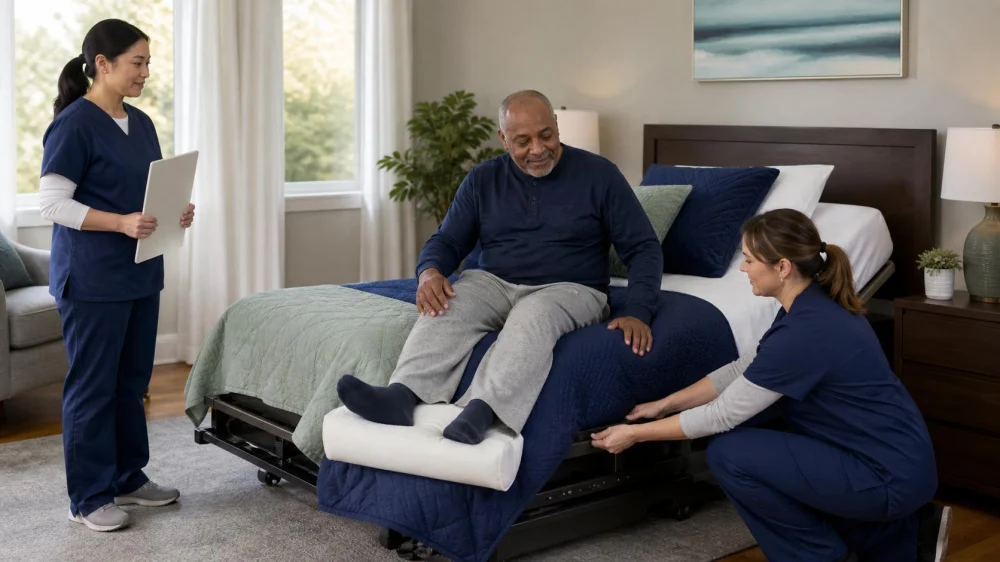
Pressure Injury Prevention at Home: Follow the Care Plan
Pressure injuries can develop when skin and deeper tissue stay under pressure or shear, especially for someone who spends long periods in bed or a chair. Prevention must be individualized by a nurse, clinician, or therapist. Caregivers can support the written plan by checking skin, managing moisture, using prescribed equipment correctly, documenting repositioning, and escalating changes early.
Quick answer
Follow the clinician’s written schedule rather than applying one universal turning interval. Explain each movement, obtain consent, use trained help and prescribed transfer equipment, keep skin clean and dry, smooth clothing and bedding, and inspect high-risk areas during care. Record position, time, skin findings, comfort, and any refusal. Report persistent redness, discoloration, warmth, hardness, pain, blistering, open skin, drainage, odor, or fever promptly.

Golden Years Home Health Inc
San DimasLos Angeles CountyCalifornia
550 W Cienega Ave Ste. H, San Dimas, CA 91773, USA
Know the risk
Risk rises with limited mobility, reduced sensation, incontinence, poor nutrition, dehydration, serious illness, circulation problems, fragile skin, or a previous pressure injury. Common sites include heels, ankles, hips, tailbone, elbows, shoulder blades, back of the head, and ears.
Pressure is not the only issue. Sliding down in bed can create shear, while dragging during a move creates friction. Tubing, braces, oxygen devices, crumbs, seams, and small objects can also press on skin. Ask the care team to reassess risk when health, weight, mobility, continence, or equipment changes.
Comfort Keepers Home Care
PasadenaLos Angeles CountyCalifornia
1147 S Fair Oaks Ave Suite B, Pasadena, CA 91105, USA
Use an individualized plan
The plan should identify permitted positions, frequency, skin-check sites, transfer method, number of helpers, support surfaces, moisture care, nutrition support, and whom to call. Conditions involving breathing, pain, recent surgery, spinal precautions, feeding tubes, or contractures can make a generic position unsafe.
Keep the current plan accessible to authorized caregivers. At handoff, state the last position change, findings, equipment in use, comfort, and next scheduled action. Never improvise a lift, restraint, wedge, or bed angle.
Check skin respectfully
Explain the check, protect privacy, use good light, and compare both sides. On darker skin, an early injury may appear purple, blue, gray, unusually dark or light rather than bright red. Feel gently for warmth, coolness, firmness, softness, swelling, or tenderness without massaging a suspicious area.
Document location, color, size, whether skin is intact, temperature, pain, and the time reported. Do not diagnose or stage a wound unless qualified and authorized. Photograph only with consent and according to agency privacy rules.
Reposition without injury
Tell the person what will happen and encourage safe participation. Lock approved equipment, set the bed to a safe working height, manage lines, and use the number of trained helpers specified in the plan. Use a draw sheet, slide aid, or mechanical lift only as trained.
Do not pull on arms, drag across sheets, or attempt a heavy move alone. Keep the head, neck, and body aligned and support limbs as prescribed. If the person has new pain, resistance, breathing difficulty, dizziness, or device displacement, stop and seek help.
Support chair routines
A wheelchair or chair must fit and provide prescribed pressure redistribution. Check posture, foot support, cushions, clothing folds, and items in the seat. Do not add a donut cushion or unapproved padding, because it can change pressure and stability.
Assist with weight shifts at the frequency and by the method in the care plan. A person who can safely shift independently may need reminders; someone who cannot needs trained assistance. Record time in the chair and skin response.
Manage moisture and friction
Clean urine, stool, sweat, and drainage promptly using the approved gentle method. Pat rather than scrub, dry folds, change wet products, and apply prescribed barrier products. Do not use strong soap, talc, alcohol, or an unapproved cream on vulnerable skin.
Keep sheets dry, smooth, and free of crumbs or objects. Choose clothing without tight bands or bulky seams over pressure points. Report diarrhea, frequent leakage, poor intake, or swallowing difficulty because the care plan may need review.
Use equipment correctly
Pressure-redistributing mattresses, overlays, heel protectors, cushions, and lifts must match the prescription and manufacturer instructions. Check that pumps are powered, settings are correct, alarms are answered, covers are intact, and tubing is not trapped beneath the person.
Do not stack mattresses or cushions, repair damaged equipment, or substitute household pillows without approval. Report a power loss, alarm, leak, poor fit, bottoming out, or missing part to the agency or equipment provider promptly.
Escalate skin changes
Relieve pressure according to the plan and contact the nurse or clinician promptly for skin that stays discolored, feels warmer or firmer, becomes painful, blisters, opens, drains, smells unusual, or worsens. Do not rub the area, pop a blister, apply a home remedy, or place the person directly back on it.
Seek urgent medical help for rapidly spreading redness, fever with confusion, severe pain, black tissue, heavy bleeding, pus, red streaks, or signs of sepsis. Call emergency services for collapse, severe breathing trouble, or inability to wake.
Frequently asked questions
Must everyone be turned every two hours?
No single interval fits everyone. Follow the individualized clinical plan and request reassessment when risk changes.
Should red skin be massaged?
No. Relieve pressure and report the change; massage may injure vulnerable tissue.
Can any cushion be added?
No. Use only the surface approved for the person and chair.
What if the person refuses?
Respect rights, explain the reason, offer permitted alternatives, document the refusal, and notify the designated clinician or supervisor.
Next steps
Review the current prevention plan with the nurse or therapist, confirm equipment and helper requirements, and create a simple record for position, skin findings, comfort, and escalation. Make sure every caregiver knows where the plan is and how to report a change.
See MedlinePlus guidance on preventing pressure ulcers and turning a person in bed.






 Family choice Home Health0.0 (0 reviews)
 Abundant Grace Home Health Services, Inc.0.0 (0 reviews)
 Comfort Caregiving5.0 (2 reviews)
 Angel Care Hospice & Palliative5.0 (20 reviews)
 Faith In Angels Hospice5.0 (12 reviews)
 ASSISTALIFE HOME CARE1.0 (1 reviews)
 Understanding the Emotional Impact of Aging
 Strategies for Encouraging Seniors to Engage in Light Household Activities
 Tips for Creating a Safe and Inviting Outdoor Space for Seniors
 Strategies for Supporting Seniors With Chronic Conditions Through Lifestyle Adjustments
 Tips for Making Home Lighting Safe and Comfortable for Seniors
 The Importance of Self-Care for Family Caregivers: How to Stay Healthy While Caring for Loved Ones