
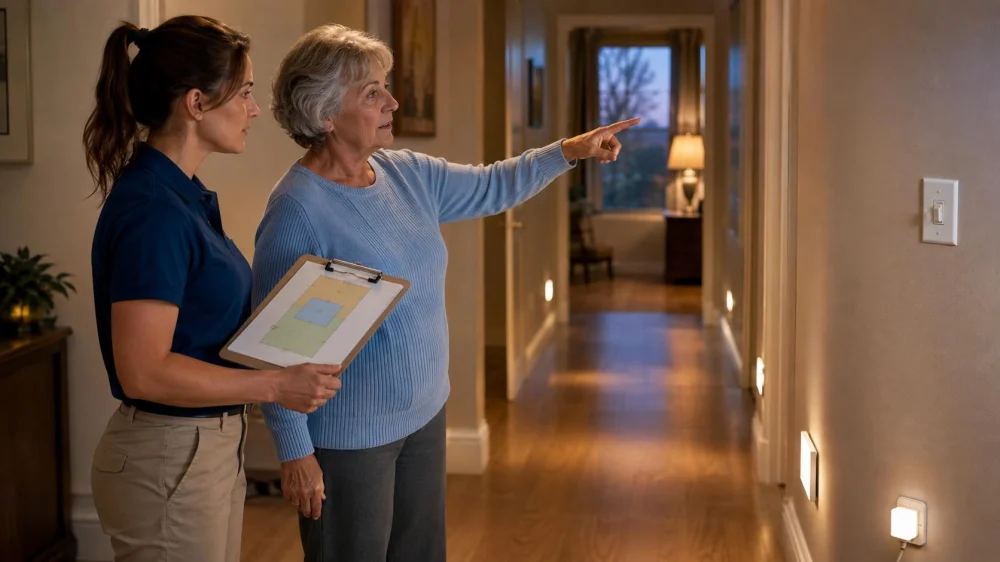
Home Care Lighting Check: Glare, Switches, and Night Paths
On this page
Quick answer
a home care lighting check is easiest to manage when you define the goal, verify the relevant details, and set clear stop conditions before acting. Ask the person's preferences, observe glare and shadow, keep switches and routes accessible, replace bulbs within fixture ratings, test backup light, and report unresolved hazards. Start with current instructions and observable facts, use a written checklist, and ask a qualified professional when the safe choice depends on technical, medical, legal, or site-specific judgment.

Helping Hands Home Health Care LLC
GlendaleLos Angeles CountyCalifornia
1241 S Glendale Ave Floor 2, suite 205B, Glendale, CA 91205, USA
Understand a home care lighting check
For this guide, a home care lighting check means a deliberate process for a specific situation rather than a promise of one universal answer. The relevant details can change with equipment, venue, provider, product, weather, health, local rules, and individual needs. Separate what you can observe from what requires measurement, records, or professional judgment.
This article is for readers in United States who want a practical starting point. It is not a substitute for current manufacturer instructions, venue rules, public guidance, contracts, or advice from a qualified professional who can assess the actual situation.
A Better Way In Home Care Beverly Hills
Beverly HillsLos Angeles CountyCalifornia
9465 Wilshire Blvd Suite 300, Beverly Hills, CA 90212, USA
Practical checklist
- Define the appointment goal and list the most important symptoms, questions, or decisions.
- Record current medicines, supplements, allergies, diagnoses, and recent care accurately.
- Add dates, patterns, triggers, measurements, and changes without trying to diagnose the cause.
- Bring only relevant records and confirm how the practice prefers to receive them.
- Write down access, language, mobility, sensory, privacy, or support needs before arrival.
- Ask the clinician to explain benefits, risks, alternatives, warning signs, and follow-up timing in plain language.
- Use the visit summary and direct care-team instructions as the authoritative record of the plan.
Step-by-step plan
- Write a one-sentence goal for the visit and rank no more than three priority questions.
- Build a concise timeline from observable facts, including what has improved or worsened.
- Review medicines and records for accuracy and remove duplicate or outdated notes.
- At the visit, answer in your own words and ask for clarification when a term or instruction is unclear.
- Before leaving, confirm medicine changes, tests, referrals, warning signs, and who schedules the next step.
- Store the summary securely and contact the care team when the actual course differs from the stated plan.
Keep a short record for a home care lighting check: date, observed condition, decisions, questions, responsible person, due date, and outcome. Photos or receipts can support the record when appropriate, but store personal, property, or account information securely.
Limits and important notes
General health information cannot diagnose a condition or replace individual medical advice. Privacy, consent, record access, and visitor rules vary. Seek prompt professional guidance for worsening symptoms, and use emergency services for severe breathing difficulty, chest pain, stroke signs, major bleeding, loss of consciousness, or another immediate danger.
Do not move mobility aids, medical equipment, furniture, cords, or switches in a way that conflicts with the individual care plan or the person's consent. Do not climb unstable furniture or work on live electrical parts. Use qualified electrical or care professionals for flickering, heat, damage, inaccessible fixtures, changing vision needs, repeated falls, or an uncertain hazard.
Frequently asked questions
What should I check first for a home care lighting check?
Start with the immediate safety or suitability question, then verify current instructions, condition, scope, timing, and who is responsible.
When is the lowest price not the best choice?
When it changes scope, quality, safety, access, support, or total cost. Compare like with like and document exclusions.
Can online reviews answer the decision?
Reviews can reveal questions to ask, but they may be incomplete, outdated, or unrelated to your exact need. Verify important facts directly.
What if the information conflicts?
Pause and ask the responsible provider, manufacturer, venue, authority, or qualified professional to clarify in writing when possible.
What should I save afterward?
Keep the final instructions, receipt or agreement, relevant photos, results, warranty or follow-up details, and unresolved actions.
Sources and evidence
Use current primary information for a home care lighting check: manufacturer instructions, the responsible venue or provider, written agreements, local authorities, and qualified professionals. Verify details for United States and the specific date because rules, availability, prices, and operating conditions can change.
Conclusion and next steps
Turn a home care lighting check into a short sequence: define the goal, verify the critical facts, prepare safely, act within clear limits, and record the outcome. Ask the person's preferences, observe glare and shadow, keep switches and routes accessible, replace bulbs within fixture ratings, test backup light, and report unresolved hazards. If an important fact remains uncertain, pause before committing time, money, access, or safety.






 Amira Home Health Care INC0.0 (0 reviews)
 Care Sharing Home Health0.0 (0 reviews)
 Western States Home Health Care Agency2.0 (8 reviews)
 New Place Home Health Care, Inc.5.0 (9 reviews)
 Aarris Homecare4.0 (20 reviews)
 A Better Solution In Home Care Burbank5.0 (11 reviews)
 Home Care Meal Handoff: Preferences, Allergies, and Storage
 The Future of Home Care: What to Expect in 2025
 How to Encourage Seniors to Engage in Light Physical Activity Indoors
 Creative Activities That Encourage Social Interaction for Seniors
 Understanding the Emotional Impact of Caregiving
 Home Care Emergency Information Sheet: Build and Review It