
Home Care Emergency Information Sheet: Build and Review It
On this page
Quick answer
Create a one-page emergency sheet with the person's preferred name, address, emergency contacts, clinicians, pharmacy, current medicines, allergies, diagnoses relevant to emergency care, communication and mobility needs, devices, insurance, advance-care document locations, and preferred hospital when applicable. Review it with the person, date it, store paper and secure digital copies, and update it after every material change.
This checklist supports home care coordination in the United States. It does not replace calling 911, a medical record, legal advice, or a valid advance directive.

Senior Helpers
Monterey ParkLos Angeles CountyCalifornia
925 S Atlantic Blvd # 205A, Monterey Park, CA 91754, USA
What the sheet is for
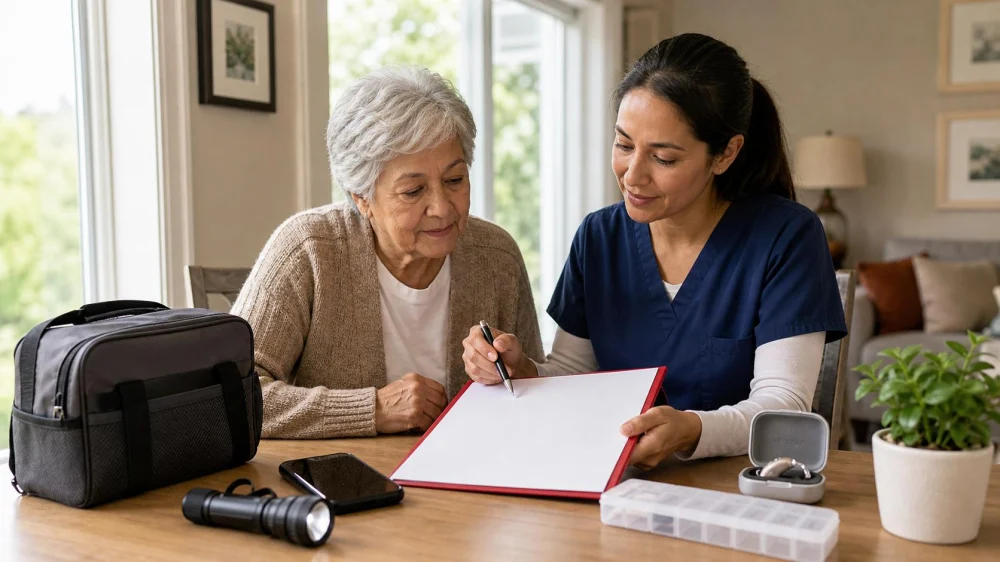
An emergency information sheet gives responders and substitute caregivers a fast, readable overview when the usual caregiver is unavailable or the person must leave home. It should answer “Who is this?”, “Whom do we call?”, “What immediate needs matter?”, and “Where is the full information?”
Keep it concise. A packed binder is valuable for details but slow during an urgent handoff. Use the one-page sheet as an index to medication lists, legal documents, equipment instructions, and care plans stored elsewhere.

What to include
- full legal name, preferred name, date of birth, home address, and primary language;
- two emergency contacts with relationship, phone, and preferred order;
- primary clinician, relevant specialists, pharmacy, and home care agency;
- current medication list location and date last verified;
- medication and material allergies with the known reaction;
- conditions important to urgent care, using clinician-confirmed wording;
- baseline communication, memory, vision, hearing, mobility, and transfer needs;
- implants, oxygen, refrigerated medicine, powered medical devices, and backup arrangements;
- insurance information and photo identification location;
- advance directive, health care proxy, portable medical order, or guardianship document location when applicable;
- service animal or pet plan and building access information;
- date reviewed and initials of the person who verified it.
Do not copy a diagnosis from memory. Ask the person and authorized clinician or record source. List only information relevant to emergency coordination; keep financial details, account passwords, and unrelated personal history elsewhere.
Build it with the person
- Ask permission. Explain what will be recorded, where it will be stored, and who may see it.
- Use the person's voice. Record communication preferences and the help they want rather than assuming.
- Verify each source. Compare medication containers, clinician lists, contact numbers, and legal-document titles.
- Separate facts from instructions. “Uses hearing aids” is a fact; medical actions require an authorized care plan.
- Write plainly. Avoid unexplained abbreviations and tiny type.
- Test the handoff. Give a copy to an approved backup caregiver and ask whether they can locate everything within two minutes.
- Date every version. Remove or clearly archive outdated copies so they are not mistaken for current information.
If the person cannot participate fully, follow applicable authorization and supported decision-making arrangements. Preserve dignity by involving them to the greatest extent possible.
Store and share it safely
Keep a paper copy in an agreed, easy-to-find location and one in the go-bag. Store a digital copy in a secure system accessible to authorized caregivers during an outage or evacuation. The National Institute on Aging recommends paper and digital copies of important information and keeping phone contact information available.
Do not post a detailed health sheet where visitors, delivery workers, or cameras can read it. A sealed envelope or clearly marked folder may balance access and privacy. Avoid hiding the only copy behind a password no backup person knows.
When sending the sheet, confirm the recipient and use the agency's approved secure channel. Record who received it. If a caregiver leaves the team, revoke digital access and recover paper copies when feasible.
Review checklist
Review the sheet on a regular schedule and immediately after hospitalization, a new diagnosis, medication change, move, new device, new caregiver, contact change, or revised legal document. Confirm:
- all phone numbers connect to the intended person;
- the medicine list date matches the current list;
- device batteries, chargers, and backup supplies are available;
- mobility and communication descriptions match the current baseline;
- transport and evacuation plans still work;
- every stored copy has the same version date.
Limits and urgent action
Do not delay emergency services while searching for a form. Call 911 for a life-threatening emergency, then provide the sheet if available. A caregiver should not interpret legal documents, diagnose a change, or alter medication based on the summary.
The sheet cannot guarantee that a preferred hospital, contact, or plan will be available. It should include backup contacts and point to current formal documents. Requirements for portable medical orders and decision-makers vary by state.
FAQ
Should Social Security numbers be included?
Usually no. They create identity-theft risk and are rarely needed on a quick emergency handoff sheet.
Can the sheet replace a medication list?
No. Include the current list or its exact location and verification date; do not compress complex dosing into an unreliable summary.
Where should advance directives be listed?
Name the exact document, authorized decision-maker, and location of the valid copy. The one-page sheet is only a pointer.
Should a photo be included?
Only with the person's consent and a clear identification need. Protect it like other personal health information.
How often should it be updated?
Use a regular review interval and update immediately after any relevant change. The visible review date helps users judge currency.
Sources and evidence
The National Institute on Aging's disaster preparedness guidance recommends emergency contacts, health documents, medicine and device planning, paper and digital copies, and backup communication. Its caregiver worksheets support medication and important-document tracking.
Next steps
Draft one page with the person, verify each contact and document, and mark the review date. Place approved copies in the home folder and go-bag, test access with the backup caregiver, and schedule the next review.






 Presidio Home Care5.0 (5 reviews)
 Apria Healthcare3.0 (427 reviews)
 Emieric Home Health5.0 (2 reviews)
 Western States Home Health Care Agency2.0 (8 reviews)
 South Bay Home Health Care - Service & Repair4.0 (15 reviews)
 Home Care Placement5.0 (74 reviews)
 The Impact of Staffing Shortages on Home Care Services | HomeCare Hub
 How to Make Home Bathrooms Safer and More Comfortable for Seniors
 How to Communicate Effectively with Healthcare Providers: Tips and Strategies
 How to Transition from Hospital to Home Care: A Complete Guide
 Understanding the Risks of Polypharmacy in Older Adults
 Tips for Creating a Safe and Inviting Outdoor Space for Seniors