
Home Care Pet Plan: Safe Visits for People, Workers, and Animals
On this page
Quick answer
A home care pet plan identifies every animal, its normal behaviour, vaccination and veterinary contacts, safe containment area, escape risks, feeding boundaries, and who handles emergencies. Introduce caregivers gradually when appropriate, secure pets before entry if behaviour is uncertain, and keep human and animal medicines separate. Pet care is not automatically included in a home care worker’s duties.

Precious Caregiving Services
Los AngelesLos Angeles CountyCalifornia
2217 Colorado Blvd, Los Angeles, CA 90041, USA
Create a pet profile
List each pet’s name, species, appearance, microchip status if known, veterinarian, emergency clinic, owner-authorized contact, and typical routine. Add a current photo. Describe observable behaviour: hides from strangers, guards food, jumps at the door, slips through gates, startles at mobility equipment, or becomes anxious around uniforms.
Avoid reassuring labels such as “friendly” without details. A pet can behave differently when the resident is ill, a new worker enters, equipment makes noise, or routine changes. Record known bite, scratch, escape, and resource-guarding history honestly so the provider can plan safe staffing and containment.

Around the Clock Caregivers
GlendaleLos Angeles CountyCalifornia
600 W Broadway, Glendale, CA 91204, USA
Plan arrival and entry
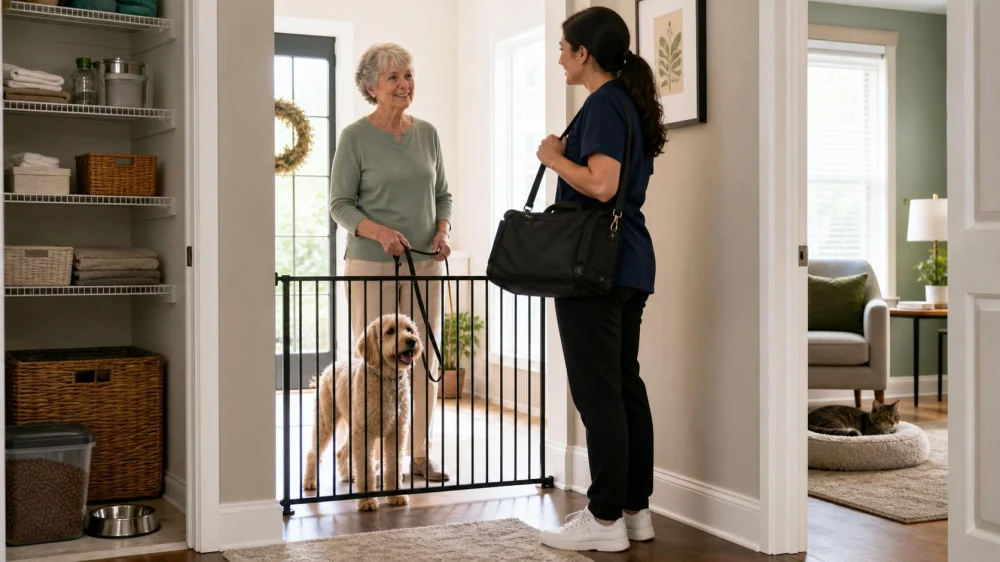
Decide who secures the pet before the caregiver unlocks the door. Use a closed room, properly sized crate, gate, leash, or another method recommended for that animal. Verify that the barrier does not create a trip hazard or block emergency exit. Exterior gates and screen doors should latch before the main door opens.
The caregiver should knock or call as agreed and wait until containment is confirmed. A first meeting may be planned with the resident or another familiar handler present, but no worker should be required to approach an animal they consider unsafe. Agency supervisors can adjust the plan, assignment, or professional support.
Set visit boundaries
Mark pet-free areas needed for personal care, sterile supplies, food preparation, exercise equipment, or worker bags. Keep the animal away from tubing, dressings, oxygen equipment, mobility devices, and open medication containers. A worker should never use physical force or an improvised restraint beyond training and policy.
Agree whether the pet may remain loose during companionship or household tasks. Consider allergies, phobias, hearing or vision changes, fall risk, and the animal’s response to walkers or wheelchairs. Boundaries protect the resident’s bond with the pet while keeping care tasks predictable.
Define pet-related tasks
Write whether the worker may refill water, measure food, open a yard door, clean a litter box, walk a dog, or do no pet care. Include quantity, timing, storage, leash and waste-supply location, weather limits, and backup person. Contracted home care and pet care have different training, insurance, and time requirements.
Do not add tasks casually during a visit. Walking may involve pulling, traffic, other dogs, heat, ice, and fall risk. Litter and waste handling require hygiene supplies and disposal instructions. If the resident can no longer manage routine animal needs, arrange a dedicated pet-care provider or family plan rather than hiding the workload.
Separate medicines and supplies
Store veterinary medicines away from human medicines and label them clearly with the pet identifier. Use separate measuring devices and a written schedule from the veterinarian or authorized caregiver. Home care staff should administer animal medicine only when the agency, contract, training, and care plan explicitly permit it.
Keep pet food away from medical nutrition products. Some human foods and medicines are dangerous to animals, and some veterinary products are unsafe for people. Do not share treats without owner approval. Wash hands after waste, food bowls, raw pet food, or animal medicine and before returning to personal care or meal tasks.
Prepare for an incident
The plan should list what to do if a pet escapes, bites, scratches, becomes ill, or cannot be safely contained. Workers should protect themselves and the resident, move to safety, contact the supervisor, and use emergency services when a person is seriously injured. Report observable facts and preserve required records.
For an animal emergency, contact the authorized person and veterinarian according to the plan. Do not transport an unfamiliar distressed animal without safe equipment and authority. Keep vaccination records and any bite-reporting information accessible, while following local public-health and animal-control requirements.
Frequently asked questions
Is feeding a pet part of home care?
Only if it is included in the agreed service scope and care plan. Confirm responsibility, quantity, timing, and backup instead of assuming the worker will do it.
Should a calm pet be confined for every visit?
Not always, but containment is prudent during entry, unfamiliar staffing, high-risk tasks, or uncertain behaviour. Review boundaries with the resident and provider.
What if a caregiver has allergies or fear?
Tell the agency before visits. It may change assignment, containment, cleaning, or scheduling. A worker should not be pressured to ignore a health or safety concern.
Evidence and limitations
This guide applies common home-care risk planning, animal-handling boundaries, medication separation, and incident documentation. It does not replace veterinary, medical, public-health, employment, insurance, or animal-control advice. Provider policies, the care contract, veterinarian instructions, and local rules govern a specific home.
Conclusion and next steps
Photograph and profile every pet, choose a reliable containment routine, and define which pet tasks are included. Separate medicines and supplies, post veterinary and backup contacts, and rehearse the entry process before unsupervised care begins. Update the plan after behaviour, staffing, health, or household changes.






 Visiting Angels4.0 (33 reviews)
 24 Hour Caregivers - Beverly Hills Home Care Services5.0 (5 reviews)
 Aurora Home Health Care Services5.0 (1 reviews)
 ComForCare Home Care (Newport Beach, CA)5.0 (1 reviews)
 Resolute Home Health Care Inc5.0 (2 reviews)
 24/7 Care At Home4.0 (94 reviews)
 How to Encourage Seniors to Take Part in Light Household Chores Safely
 Laundry Hygiene in Home Care: A Caregiver Checklist
 How Home Care Services Supported a Family During a Crisis | HomeCare Hub
 Case Study: Reducing Hospital Readmissions with Home Care
 How to Support Seniors in Maintaining Independence During Illness or Recovery
 The Importance of Cultural Competence in Home Care