
How to Plan a Safe Home Entry for Care Workers
On this page
- Quick answer
- Start with the person's consent and routine
- Choose a controlled entry method
- Verify workers without creating delays
- Make the entry route usable
- Plan for no answer and failed access
- Protect codes, keys, and records
- Home-entry checklist
- Limitations and urgent situations
- Frequently asked questions
- Care-support notes
- Run one arrival drill
Quick answer
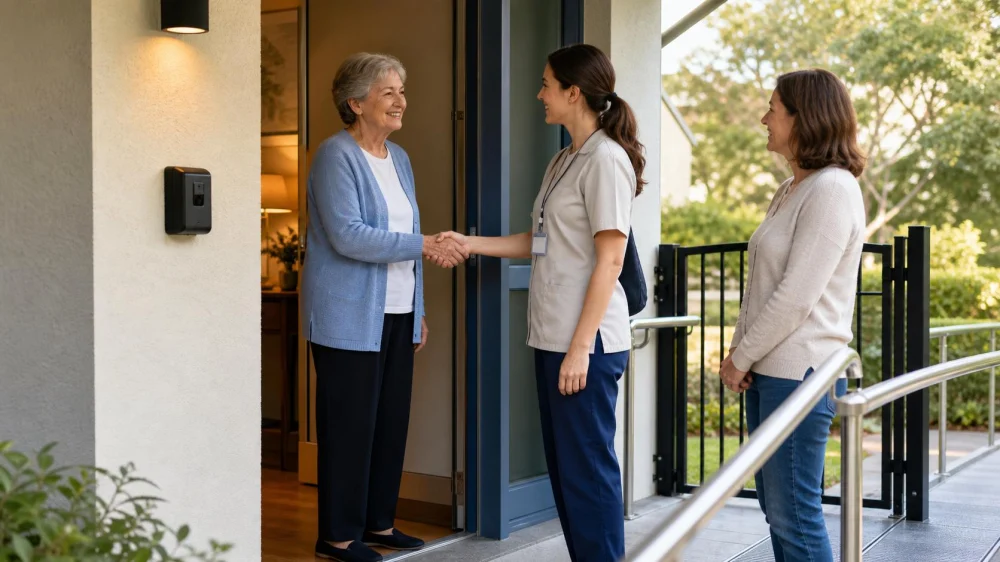
Create one written, consent-based entry plan for scheduled care visits. Specify the approved door, normal arrival window, identification method, doorbell or phone sequence, key or lockbox procedure, pet steps, lighting, mobility-clear route, no-answer escalation, emergency exception, and who may receive access information. Test the process with the older adult present and update it whenever a worker, code, residence, or care arrangement changes.
The goal is reliable access without giving more people or systems permanent access than necessary.

Great Choice Home Health
ArcadiaLos Angeles CountyCalifornia
805 W Duarte Rd STE 111, Arcadia, CA 91007, USA
Start with the person's consent and routine
Involve the person receiving care to the greatest extent possible. Ask which entrance feels safest, who may enter, whether workers should call before arrival, how privacy should be respected, and what times conflict with sleep, bathing, meals, prayer, pets, or other routines.
Document any legal representative or authorized decision-maker without assuming that a family relationship alone grants access. If the person's preferences and a caregiver's convenience conflict, raise the issue with the responsible care organization rather than quietly changing the arrangement.

Choose a controlled entry method
Options include the resident opening the door, a family member meeting the worker, a staffed building desk, a time-limited smart-lock code, or a secured key lockbox. Compare reliability, accessibility, internet or power dependence, audit history, battery maintenance, and how quickly access can be revoked.
Avoid keys under mats, shared permanent codes, or labels that identify a vulnerable resident. If a lockbox is used, follow building, landlord, insurance, fire-safety, agency, and local requirements. Mount it where authorized people can reach it without creating a trip or weather hazard.
Verify workers without creating delays
Ask the agency how workers identify themselves and how schedule changes are communicated. Keep the agency's independently verified main number available; do not rely only on a number supplied by an unexpected visitor. The worker should know the resident's preferred form of address and the approved arrival procedure without broadcasting private health details.
When a substitute arrives, verify the change through the agency before granting access unless the established plan provides another trusted method. Do not ask workers to share unnecessary personal documents or photograph identification contrary to policy.
Make the entry route usable
Provide adequate lighting, a stable walking surface, visible address numbers for authorized responders, handrails where needed, and a route free of packages, loose mats, cords, ice, water, or garden tools. Confirm that walkers and wheelchairs can pass without forcing the resident to move furniture during arrival.
Plan pet separation before the door opens. Store deliveries away from the care path and ensure a worker can close and lock the door from inside. If the resident has hearing, vision, communication, or mobility needs, choose door alerts and response steps with the relevant clinician or accessibility professional.
Plan for no answer and failed access
Define how long the worker waits, how many call or doorbell attempts are made, which contacts are tried and in what order, when a supervisor is notified, and what observations raise concern. Distinguish an ordinary missed visit from signs of an emergency.
Do not create a blanket permission to force entry. Emergency access depends on circumstances, local law, agency policy, and responder judgment. If there is an immediate threat to life or safety, contact emergency services rather than spending critical time troubleshooting a consumer lock.
Protect codes, keys, and records
Share access details only with authorized people through the approved channel. Do not place a full door code in a visible calendar, group text, or unprotected care note. Keep a record of issued keys and code recipients, return or revoke access promptly, and change codes after loss, staff departure, or suspected disclosure.
Review smart-device privacy settings, account ownership, recovery methods, and event logs. Avoid indoor cameras in private care areas; camera use may affect consent, worker privacy, employment rules, and local law.
Home-entry checklist
- Record consent, approved door, and arrival window.
- Choose a controllable key, code, or staffed method.
- Verify agency identity and substitution process.
- Light and clear the route.
- Secure pets before opening the door.
- Write the no-answer contact sequence.
- Limit and audit access information.
- Test, date, and review the plan.
Limitations and urgent situations
- This guide is not legal, security, medical, or emergency-response advice.
- Lease, building, agency, insurer, and local rules may limit entry methods.
- Do not ask an older adult to rush, climb, or cross an unsafe route to open a door.
- Unexpected silence plus signs of danger requires professional emergency assessment.
- Change compromised codes and report lost keys promptly.
Frequently asked questions
Should every care worker receive the same permanent code?
Prefer the least-access method that remains reliable, such as individually assigned or time-limited credentials when supported.
What if the resident dislikes a lockbox?
Respect the concern and compare other workable methods with the resident and agency.
Can a neighbour hold the key?
Only with informed authorization and a clear backup, return, privacy, and emergency plan.
Should the worker enter if the door is already open?
Follow the agreed announcement and entry procedure; an unlocked door is not necessarily consent to enter.
How often should the plan be reviewed?
Review after staffing, health, mobility, housing, device, contact, or schedule changes and on a regular calendar date.
Care-support notes
The U.S. Administration for Community Living supports services that help older adults remain at home and provides caregiver information, training, respite, and local-resource access through programs such as the National Family Caregiver Support Program and Eldercare Locator. Entry planning should be coordinated with the actual home-care provider and the person's authorized support network.
Run one arrival drill
During daylight and with the resident's consent, have the authorized worker follow the plan from arrival through relocking the door. Note every delay or ambiguity, correct it, and distribute only the final dated procedure.






 Remedium Home Health Care0.0 (0 reviews)
 Universal Home Care, Inc.4.0 (19 reviews)
 Homewatch CareGivers of Huntington Newport Beach4.0 (29 reviews)
 Connections Care Home Consultants4.0 (10 reviews)
 24/7 Care At Home Hospice5.0 (11 reviews)
 Human Touch Home Health3.0 (2 reviews)
 Legal Rights and Protections for Family Caregivers: Know Your Rights and Benefits
 How to Safely Incorporate Balance and Strength Training at Home
 Effective Strategies for Promoting Physical and Mental Wellness Through Routine
 Understanding the Emotional Impact of Aging
 How to Encourage Seniors to Explore New Skills and Interests Safely
 What to Expect from In-Home Care Services | Comprehensive Guide