
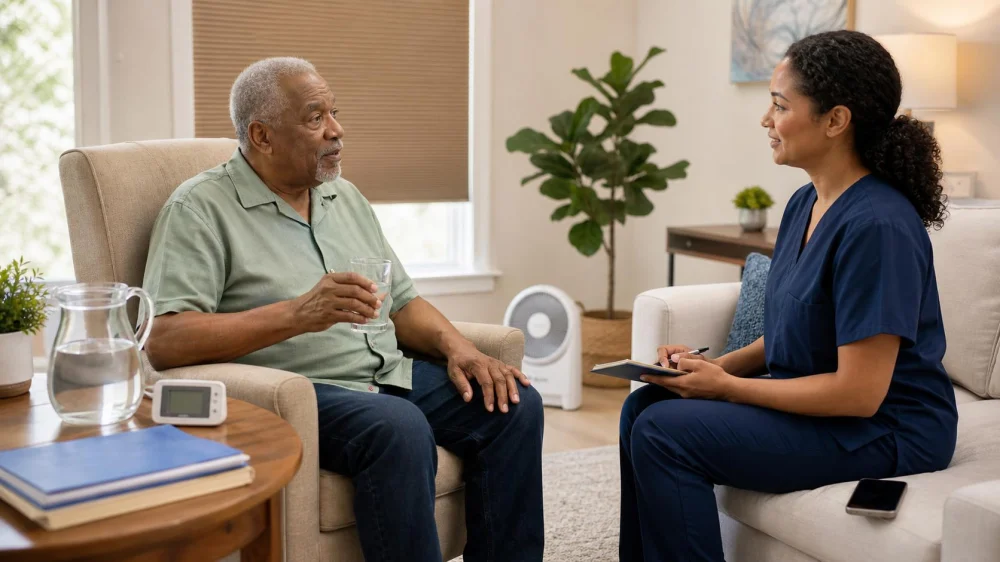
Home Care Hot Weather Plan: Cooling, Check-Ins, and Escalation
On this page
Quick answer
Before hot weather, confirm a reliable air-conditioned location, transportation, twice-daily or clinician-directed check-ins, safe hydration instructions, medicine and device storage, backup power, and emergency contacts. Record the person's usual condition so caregivers can spot change. Seek prompt medical care for heat-related symptoms and call emergency services for confusion, collapse, seizures, or other life-threatening signs.
This guide supports US home caregivers, especially those helping adults age 65 or older. The person's clinician and emergency plan control individual fluid, medicine, and medical-device decisions.

Caring Hands Home Health Agency
Culver CityLos Angeles CountyCalifornia
5701 W Slauson Ave # 202, Culver City, CA 90230, USA
Plan before hot weather
Older adults can be more vulnerable to heat because they may adjust less effectively to sudden temperature changes, have chronic conditions, or take medicines that affect temperature control or sweating. Start the plan before a heat alert.
- Check local heat and air-quality forecasts and choose who monitors alerts.
- Confirm that air conditioning works and identify the coolest safe room.
- List a backup cooled location, its hours, accessibility, and transport.
- Test phone, charger, backup battery, medical alert, and device power.
- Ask the clinician about fluid limits, heat-sensitive medicines, and condition-specific warning signs.
- Assign check-in times and a backup person if the scheduled caregiver cannot arrive.
- Keep emergency information, keys, access instructions, and transport aids ready.
Do not wait for the home to become dangerously hot before arranging transport. A cooling center that cannot accommodate the person's mobility, communication, restroom, pet, or medical-device needs is not a complete backup.

Cooling and hydration plan
Use air conditioning when available. CDC guidance says not to rely on a fan as the main cooling source during very hot conditions; current CDC material also notes that fans can increase body temperature when indoor temperatures exceed 90°F. Use the local heat guidance and move to an air-conditioned place when the home cannot stay safe.
Close sun-exposed shades when appropriate, reduce oven and stove use, choose light clothing, and schedule necessary activity for cooler periods. Keep clear walking routes to the coolest room and bathroom. Avoid placing cords, fans, or portable equipment where they create falls.
Offer fluids according to the person's care plan rather than waiting for thirst, but never override a clinician's fluid restriction. People taking diuretics or living with heart, kidney, or other conditions may need individualized instructions. Record offered and accepted fluids only if this is part of the authorized plan.
Caregiver check-in sheet
At each planned contact, record time, caregiver, indoor temperature if measured with a reliable device, air-conditioning status, fluids according to the plan, alertness, speech, mobility, breathing, skin condition, symptoms, and actions taken. Compare with the person's known baseline.
Ask clear questions: Is the cooling system working? Are you able to drink according to your plan? Do you feel dizzy, weak, nauseated, short of breath, or unusually tired? Is there a change in headache, cramps, sweating, or urination? Do not interpret a checklist as a diagnosis.
The CDC advises caretakers of older adults during hot weather to keep a close eye on them, including visits at least twice a day, and to check cooling, hydration, knowledge, and signs of heat stress. A person's clinician may recommend more frequent monitoring.
Medicines and devices
Some medicines can affect heat tolerance, hydration, or sweating, and some require temperature-controlled storage. Do not stop or change a medicine because of heat without talking to the prescriber. Ask the pharmacist or clinician how each product should be stored and what to do during a power outage.
Map powered equipment, battery run time, charging order, and vendor emergency number. Identify refrigerated medicines and use only approved storage arrangements; do not put them directly on loose ice unless instructions permit it. Record any temperature excursion and call the pharmacist for product-specific advice.
Symptoms and escalation
CDC lists possible overheating symptoms such as muscle cramping, unusually heavy sweating, shortness of breath, dizziness, headache, weakness, nausea, and vomiting. Move the person to a cooler place, stop exertion, and seek medical advice promptly according to the care plan.
Call emergency services for confusion, fainting or collapse, seizure, severe breathing difficulty, inability to awaken, or other life-threatening change. Begin dispatcher-directed cooling or first aid while help is coming. Do not give fluids to a person who is not fully alert or cannot swallow safely.
After any escalation, document the time, symptoms, indoor conditions, actions, medicines due, fluids offered, and who was contacted. Give responders the emergency sheet and current medication list.
Limits and consent
Respect the person's choices while explaining the risk and available options. If they decline cooling or transport and you are concerned about decision-making ability or immediate danger, follow the agency and emergency escalation policy rather than arguing or using force.
Temperature thresholds and responses can vary with location, humidity, health, housing, and public-health alerts. A generic plan cannot replace clinician guidance for an individual at high risk.
FAQ
Is a fan enough during a heat wave?
Not always. CDC advises air conditioning or a cooled location in very hot conditions and cautions against relying on a fan as the primary cooling source.
Should caregivers encourage extra water?
Follow the person's clinician-approved hydration plan. Ask specifically if fluids are restricted or diuretics are used.
What if air conditioning fails overnight?
Use the backup contact and accessible cooled location identified in advance. Do not wait until symptoms appear to arrange safe transport.
Can medicines be kept in a cooler?
Only according to pharmacist or manufacturer instructions. Excess cold, moisture, and direct ice contact can damage some products.
How often should someone check in?
CDC's older-adult heat guidance recommends close monitoring, including at least twice-daily visits; individual risk or clinician instructions may require more.
Sources and evidence
CDC provides specific heat guidance for adults age 65 and older and caretakers plus broader heat-health prevention guidance. This checklist translates those principles into a home care handoff without replacing medical direction.
Next steps
Confirm cooling and transport today, contact the clinician or pharmacist about fluid and medicine questions, assign check-ins, and place the emergency sheet near the go-bag. Run a brief practice call so every backup caregiver knows when and how to escalate.






 Presidio Home Care5.0 (5 reviews)
 Apria Healthcare3.0 (427 reviews)
 Emieric Home Health5.0 (2 reviews)
 Western States Home Health Care Agency2.0 (8 reviews)
 South Bay Home Health Care - Service & Repair4.0 (15 reviews)
 Home Care Placement5.0 (74 reviews)
 The Impact of Staffing Shortages on Home Care Services | HomeCare Hub
 How to Make Home Bathrooms Safer and More Comfortable for Seniors
 How to Communicate Effectively with Healthcare Providers: Tips and Strategies
 How to Transition from Hospital to Home Care: A Complete Guide
 Understanding the Risks of Polypharmacy in Older Adults
 Tips for Creating a Safe and Inviting Outdoor Space for Seniors