
Home Care Visitor Plan: Consent, Timing, and Privacy
On this page
- Start with the person's preferences
- Define who counts as a visitor
- Set invitation and confirmation rules
- Choose visit times and length
- Protect health information
- Manage entry and home security
- Coordinate with care tasks
- Plan for children, pets, and gifts
- Handle illness and infection precautions
- Respond to unwanted or difficult visits
- Visitor plan checklist
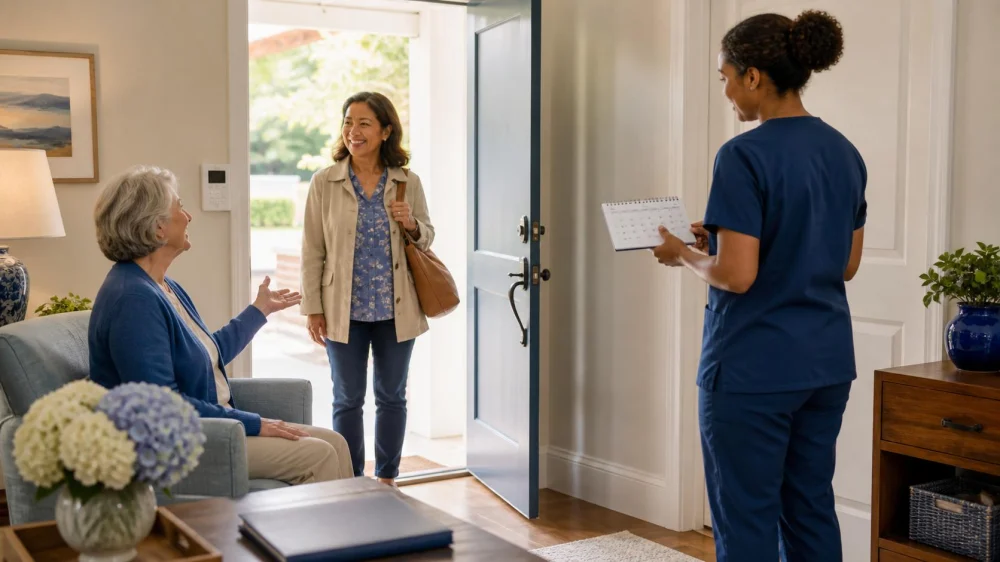
Visitors can provide connection, enjoyment, practical help, and continuity for a person receiving care at home. They can also interrupt rest, personal care, medicine routines, meals, or privacy when visits are unplanned. A visitor plan sets expectations while keeping the person's consent and preferences at the center.
The plan should reflect the person's legal rights, decision-making authority, cultural practices, relationships, health needs, and living arrangement. It is not a tool for caregivers to isolate someone for convenience. When safety, abuse, coercion, legal restrictions, or capacity questions arise, involve the appropriate safeguarding, clinical, or legal professionals.
Keep the current plan where authorized caregivers can find it without displaying private names to every caller. Date each version, identify who agreed to it, and remove outdated copies. At shift handoff, mention only confirmed visits, access changes, boundaries needed for that day, and any agreed follow-up after the visit.

The Key - Formerly 123 Home Care
Los AngelesLos Angeles CountyCalifornia
3407 W 6th St Suite 709, Los Angeles, CA 90020, USA
Start with the person's preferences
Ask whom the person wants to see, whom they do not want to see, preferred days and times, how much notice feels comfortable, and whether visits should occur in a particular room or outside. Revisit preferences because energy, health, and relationships change.
Offer choices privately where possible. A person may enjoy short visits but feel unable to end them, or may want one friend without a larger group. Record preferences in respectful language and share only what authorized caregivers need.

Visiting Angels Senior Home Care West San Fernando Valley
Los AngelesLos Angeles CountyCalifornia
10999 Riverside Dr #305, Toluca Lake, CA 91602, USA
Define who counts as a visitor
Distinguish social visitors from paid caregivers, clinicians, delivery workers, maintenance staff, clergy, volunteers, and emergency personnel. Each group may have different scheduling, identification, privacy, and access requirements.
Family status does not automatically remove the need for consent or notice. A shared household, lease, guardianship, power of attorney, agency policy, or court order may affect authority. Seek local guidance when roles are disputed.
Set invitation and confirmation rules
Choose one contact method for requests and confirmations: phone, text, calendar, or an authorized family coordinator. State how much notice is preferred and who can approve a time. Avoid publishing a public schedule or health-related reason for a restriction.
Confirm the visitor's name, number of people, arrival window, expected length, and any access need. Ask visitors not to add guests without permission. A tentative suggestion is not a confirmed visit.
Choose visit times and length
Work around the person's preferred waking, meals, rest, therapy, personal care, and appointments rather than organizing solely around caregiver convenience. Some people have more energy at a consistent time of day. Build in recovery time between visitors.
Set a realistic duration and provide a gentle closing cue, such as a calendar reminder or caregiver check-in approved by the person. Visitors should not pressure someone to continue when they appear tired, uncomfortable, or ready for privacy.
Protect health information
Do not discuss diagnosis, medicines, symptoms, finances, agency issues, or personal care within a visitor's hearing without permission. Put charts, medicine records, bills, identification, and computer screens away. A visitor seeing care equipment does not authorize explanation.
Photography, video calls, social posts, and location sharing require consent. Confirm who may appear and where images may be shared. Never record during personal care or in a private care area.
Manage entry and home security
Decide whether the visitor rings, calls from outside, uses a staffed entrance, or receives escorted access. Do not share lockbox codes, keys, alarm details, or building credentials with a social visitor unless the authorized person has approved a secure arrangement.
Keep exits, mobility routes, ramps, and equipment clear. Visitors should store coats, bags, and shoes in the agreed place. Verify identity before opening the door to an unexpected caller and contact building security or emergency services if a person will not leave.
Coordinate with care tasks
Visitors should not administer medicine, transfer the person, adjust equipment, provide food, or perform personal care unless authorized and trained within the care plan. Good intentions do not replace instruction, consent, or agency policy.
Pause or relocate a visit when a private care task is due. Caregivers should explain only that privacy is needed, not disclose the task. Resume later if the person wants and the schedule permits.
Plan for children, pets, and gifts
Ask before bringing children or animals. Consider noise, supervision, allergies, infection precautions, resident pets, equipment, and safe routes. A service animal follows applicable access rules and should not be treated as a casual pet.
Check gifts of food, flowers, fragrance, supplements, clothing, or equipment against preferences and care restrictions. Do not pressure the person to eat, use, or display a gift. Keep labels for food and avoid unapproved medicine or supplement products.
Handle illness and infection precautions
Ask visitors to postpone when they have fever, vomiting, diarrhea, a new contagious rash, respiratory symptoms, or a known exposure covered by the current care plan. Follow clinician and public-health guidance for hand hygiene, masks, ventilation, and protective equipment when applicable.
Requirements depend on the person's health and current conditions. A caregiver should not invent clinical restrictions without authority. When uncertain, contact the responsible nurse or clinician before the visit rather than making a public announcement about the person's diagnosis.
Respond to unwanted or difficult visits
Use the agreed phrase or signal to end a visit. A caregiver can state that the visit is over and escort the person to the door without debate. Document threats, coercion, repeated boundary violations, financial pressure, or attempts to access records.
If the visitor refuses to leave, threatens anyone, blocks care, or creates immediate danger, contact building security or emergency services. For suspected abuse or exploitation, follow safeguarding and mandatory-reporting requirements while prioritizing the person's safety and rights.
Visitor plan checklist
Record preferred visitors, excluded or restricted contacts under lawful authority, invitation process, notice, visit length, quiet times, privacy rules, access method, illness precautions, gifts, photography, children, pets, care-task boundaries, and the ending signal.
A visitor plan should make connection easier, not bureaucratic. Clear timing and boundaries protect rest, care, security, and confidential information while letting the person choose meaningful company. Review the plan with them regularly and change it when their wishes or circumstances change.






 Caring Hands Home Health Agency4.0 (4 reviews)
 Guardian Angel Home Care of Santa Ana5.0 (1 reviews)
 Home Instead4.0 (9 reviews)
 Heavenly Home Health Care5.0 (1 reviews)
 Seniors Helping Seniors® Orange5.0 (5 reviews)
 Beverly Hills Home Health Care5.0 (1 reviews)
 Tips for Supporting Seniors With Emotional Health Challenges
 The Importance of Encouraging Curiosity and Lifelong Learning in Older Adults
 Success Story: Managing Chronic Illness with Home Care
 Tips for Helping Seniors Stay Connected Through Technology
 The Role of Artificial Intelligence in Home Health Care
 How to Encourage Older Adults to Participate in Creative Arts